
First-generation PA student turns lived experience into purpose
UC Davis path leads from housing insecurity to community care
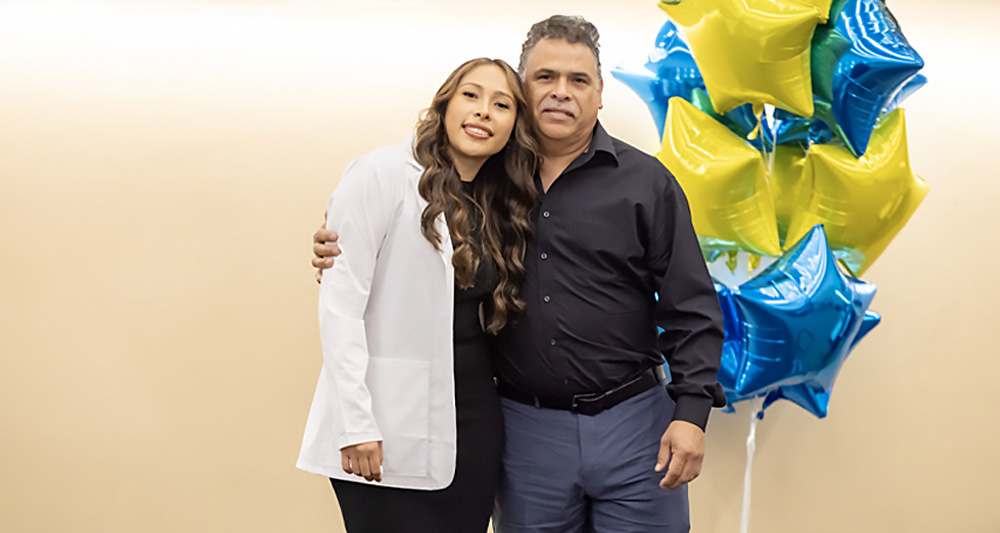
Sandra Luna did not grow up with a road map to college, much less a career in medicine.
Born and raised in Southeast Los Angeles, she was the first in her family to attend college. Luna started at community college, transferred to UC Riverside and then set her sights on becoming a physician assistant (PA).
“No one in my family has gone to college,” Luna said. “I’m actually the only and the first.”
Her path was not easy or traditional. When she was 18, Luna and her family were evicted and experienced housing insecurity. She was still going to school and working while her family faced deep uncertainty.
“It was very stressful. It was very chaotic,” she said. “A lot of the time it felt really impossible. Sometimes I even look back now and I’m like, I have no idea how I got here. But it was dedication. I wanted to do something and I didn’t stop till I reached it.”
That experience did more than shape Luna’s career choice. It shaped how she sees patients.
She understands that a missed appointment, delayed prescription or untreated symptom is not always about choice. Sometimes, it is about rent, transportation, food, work schedules, language barriers or fear of being judged. For Luna, becoming a PA means looking beyond the reason listed on a chart and asking what else may be affecting a patient’s health.
Seeing the whole person
That perspective now guides the kind of provider she hopes to become: one who listens first, explains clearly and makes patients feel respected, understood and welcome.
That is why the Betty Irene Moore School of Nursing at UC Davis was her first choice.
“The reason why I wanted to become a PA very much aligned with their mission to expand healthcare to the underserved,” Luna said.
She quickly got involved in UC Davis’s student-run clinics, volunteering at Clínica Tepati in Sacramento. There, she cared for many Spanish-speaking patients and saw people who reminded her of her mother, aunts, uncles and siblings.
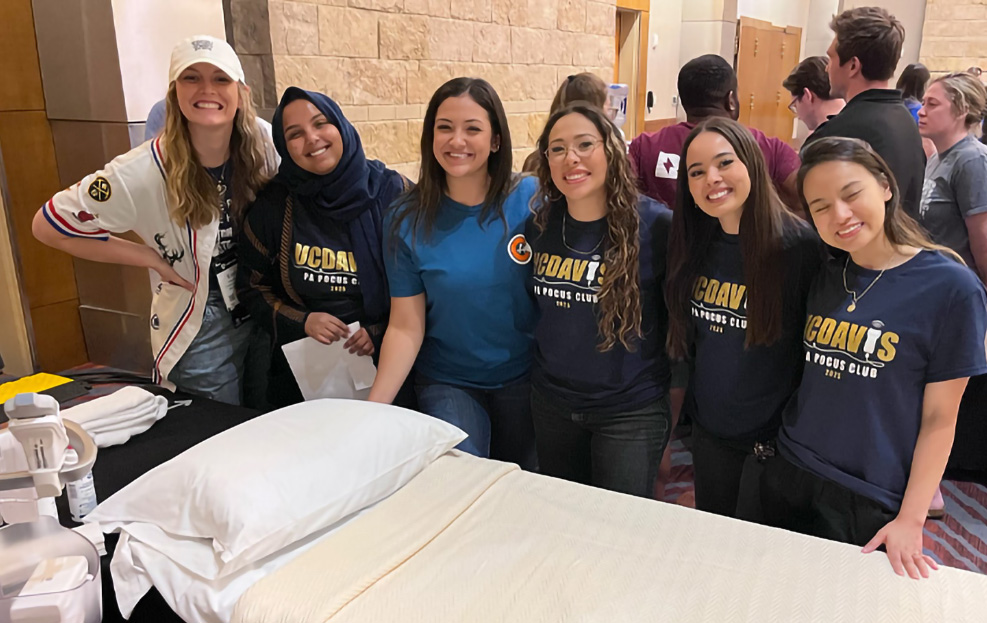
Through the POCUS competition, Sandra Luna, fourth from left, sharpened skills she hopes to use in service to future patients.
Luna’s commitment to underserved communities is also backed by national recognition. She received a National Health Service Corps Scholarship, a federal award for students preparing for primary care careers who commit to serving in communities with limited access to care after graduation. For Luna, the scholarship is more than support for her education. It is a direct extension of the reason she entered medicine in the first place: to care for people and families who too often face barriers before they ever reach an exam room.
Finding her voice
Even as a first-year student, Luna sought ways to grow beyond the classroom. She participated in the American Academy of Physician Associates conference and joined the UC Davis AAPA Point-of-Care Ultrasound team, which earned second place.
“Sandra stood out early for the way she paired service with initiative,” explained Phil Emond, interim PA program director. “Through the student-run clinics and her involvement with the AAPA Point-of-Care Ultrasound team, she showed a deep commitment to learning, advocacy and the communities she hopes to serve. That dedication will make her an outstanding provider.”
Now, she is preparing for the next step. PA students take part in commencement before completing their final three months of the program. To walk, they must first pass major comprehensive exams. After finishing the program, Luna will be eligible to sit for the Physician Assistant National Certifying Exam.
The moment feels surreal.
“We’re at this point with three months left to officially being done,” she said. “It’s bittersweet.”
Luna is drawn to psychiatry and family medicine. She hopes patients leave her care knowing they were heard, respected and treated like family.
“I hope to be the provider that when they look back, they truly know that I had their best interest in mind always,” she said. “I think the point of life at the end of the day is connection and community, and I hope that my patients feel like they have a community in the clinic.”