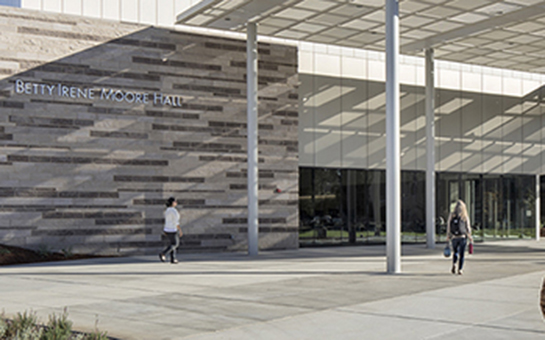

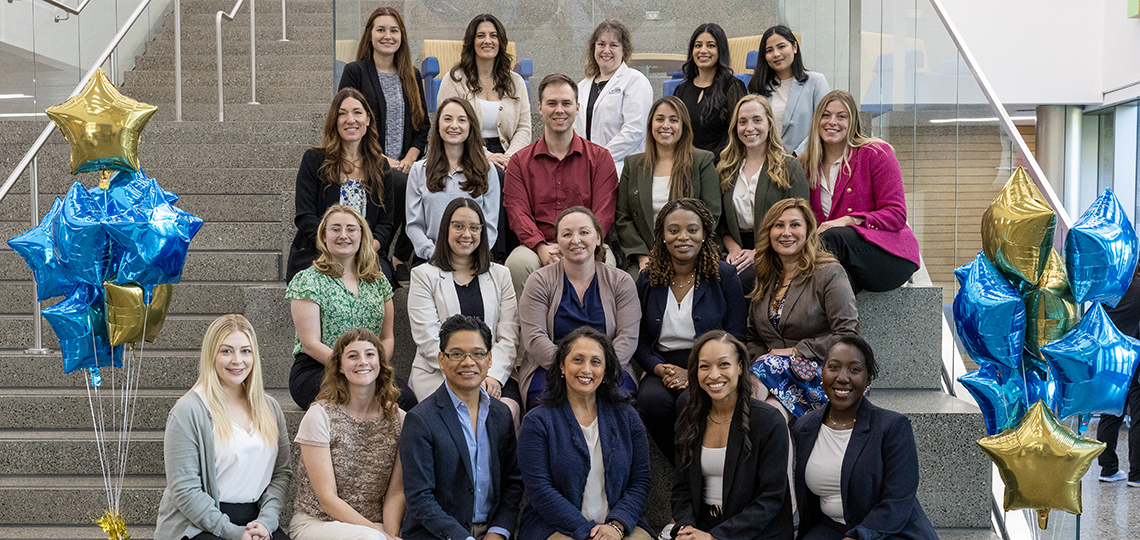
Students, faculty, family and friends gathered at the Betty Irene Moore School of Nursing at UC Davis this spring to mark a key milestone for students in the Doctor of Nursing Practice — Family Nurse Practitioner (DNP-FNP) program.
The 2025 Academic Symposium in May was the first time the school hosted a formal event where DNP-FNP students presented outcomes of their scholarly projects. The symposium featured poster and oral presentations from the 21 graduating students, as well as remarks from guest speakers.
Poster topics ranged from oncology nutrition and weight management prescription to improving digital literacy and risk assessments in primary care.
“The event was the chance for students to show the real impact of their work — sharing evidence-based practice, tackling real health care problems and leading change for better health,” said Charleen Singh, Ph.D., M.B.A., F.N.P.-B.C., CWOCN, R.N., DNP-FNP program director. “They are the first class to graduate from this program that launched in 2022 and they surpassed all expectations.”
Scholarly projects
The projects involved designing, implementing and evaluating a quality improvement or practice change in a specific setting, such as a primary care clinic or community health setting.
Projects are the culmination of three years of study, and focus on solving real problems in health care at both micro and macro levels, whether the impact is one patient or an entire community, by implementing evidence-based care.
“(DNP student) work helps patients, families and health care teams, and proves that nursing can lead the way in solving big problems with smart, caring solutions,” said Joanne Minnick, D.N.P., A.P.R.N., A.C.N.P.-B.C., F.N.P.-B.C., an assistant professor and project chair.
DNP and PhD
Like a Doctor of Philosophy (PhD), the DNP is a terminal degree. But the courses of study serve different purposes.
The DNP is practice-focused, preparing nurses to lead in clinical settings, improve care and apply research to real-world practice. Think of it as training nurse leaders and change-makers in health systems.
The PhD is research-focused, preparing nurses to become scientists who create new knowledge, design studies and teach the next generation. These nurses shape the evidence that DNPs then put into action.
“PhDs build the science and DNPs apply it to improve care,” Singh explained. “Their scholarly projects bridge the gap between theory and practice by applying research in real settings.”
Bridging the gap
It typically takes 17 years for health care research to move from initial discovery into routine clinical practice. The School of Nursing’s students want to be a part of a quicker solution.
“We have the research, but who’s bringing it into practice? We really are the [middle person] to alleviate those problems,” said graduating student Catherine Koanja, D.N.P., F.N.P.-C. “You don’t have to wait those 17 years. You can get some impact and have some real benefit to those you serve.”