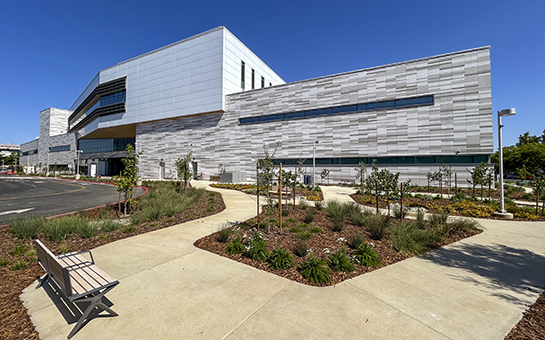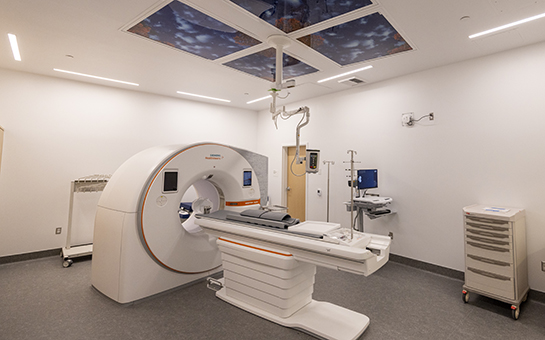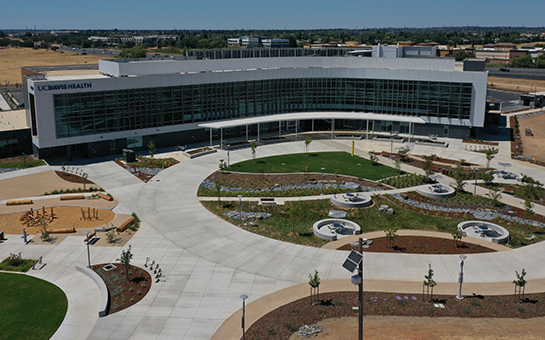

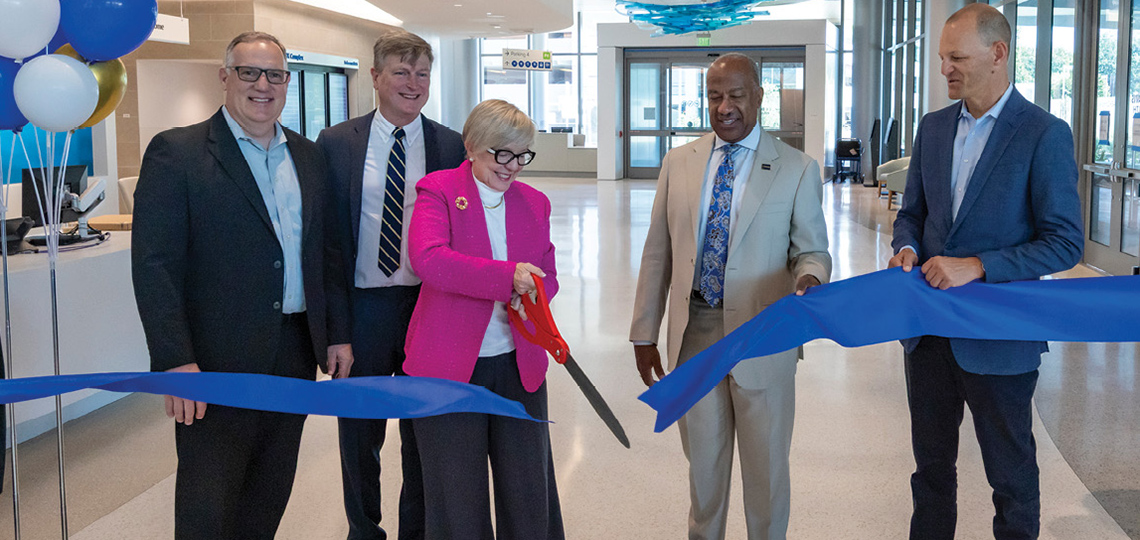
Representatives from the health system, surrounding Oak Park neighborhood and community leaders joined in a ribbon-cutting celebration on June 25.
“Today’s grand opening of the 48X Complex marks the latest chapter in bringing Vision 2030 to life. It’s a state-of-the-art surgery center that’s among the largest of its kind in the nation,” said UC Davis Chancellor Gary S. May, Ph.D. “The 48X Complex also positions UC Davis Health as a national leader in ambulatory surgical capabilities. I appreciate all the vision and teamwork in making projects like 48X come to life. Together, we are not only redefining patient care, we are setting the stage for the future of health care.”
DPR Construction served as the contractor and SmithGroup provided architectural design services. In line with UC Davis Health’s dedication to environmental stewardship, the 48X Complex is designed to exceed UC Sustainable Practices Policy energy efficiency goals and is on track for LEED Certification. This reflects a focus on creating healthy, highly efficient, and cost-saving green buildings.
The new facility will also generate more than 550 new jobs, a commitment that the health system has made to the local area.
48X is one of the projects that will add a historic 1 million square feet to UC Davis this year. By 2030, more than 3.5 million square feet of new facilities will have opened, including the 14-story California Tower, which replaces existing parts of the medical center due to state seismic laws. In addition, there are expansions in Elk Grove, Rocklin and in Folsom, where new facilities opened in August.
It is the largest health system capital improvement program in the United States today.
“We are passionate about meeting the needs of our patients and their families. We know the demand for outpatient surgery is going to grow dramatically in the coming years,” said UC Davis Health’s Interim Vice Chancellor of Human Health Sciences and Chief Clinical Officer Bruce Hall, M.D., Ph.D., M.B.A. “The future of care delivery is to meet patients where they need us, when they need us, and how they need us, which might mean outpatient, in their home, or even virtual; and enabled by new medical technologies such as wearable devices.
“We are trying to put patients at the center of what we do, ensuring they feel listened to, heard, respected, and valued. These are all key elements in healing and creating long-term health partnerships with the patients and families we will serve in this new center.”