

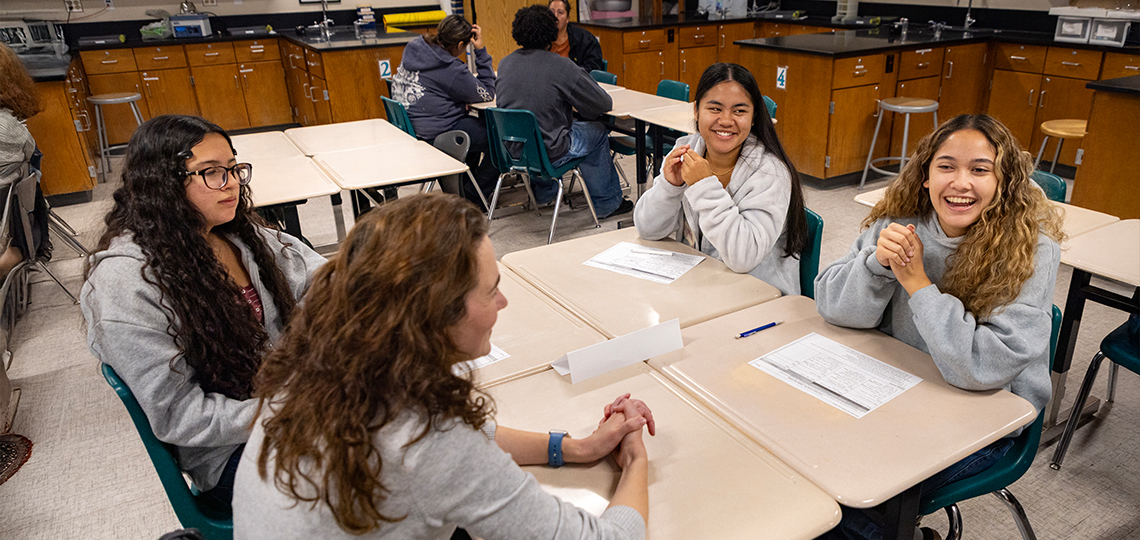
Called the Cancer Research Immersion Academy, this groundbreaking program was developed by UC Davis Comprehensive Cancer Center in partnership with Sacramento State University. Designed for high school students, it offers a hands-on introduction to cancer research and health care careers. The idea is to help young minds envision a future where they can make a real difference.
From classroom curiosity to career confidence
Each week, more than 60 students in Sheldon High’s junior-level microbiology classes dive into the science of cancer. They examine cancer cells under microscopes, explore how DNA influences cell behavior and cancer risk, and, on this day, engage directly with professionals from UC Davis Comprehensive Cancer Center.
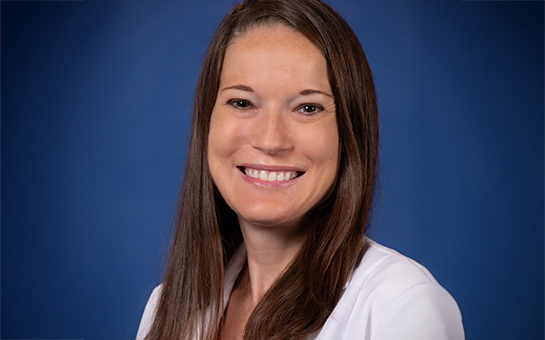
“Today is all about exploring the breadth of careers in the cancer field,” said Kirsten Asher, who is with the cancer center’s Office of Education, Training, and Workforce Development and created the cancer-related curriculum. “We don’t have just doctors and nurses here. We have brought researchers, pharmacists, data and compliance experts, health educators and even a cancer center marketing specialist.”
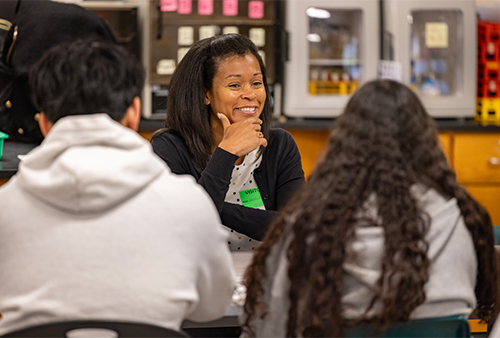
In a format Asher calls “speed networking,” students met in small groups with professionals for 15-minute Q&A sessions. They asked anything — from how long it takes to analyze a tumor to what researchers do in their free time. The goal? To spark curiosity and help students discover which careers excite them most.
Cancer topics in the classroom include:
- What does cancer look like as a biological process and as a human experience?
- How do cancer-causing mutations affect a cell’s behavior?
- How could specific changes in a tumor’s DNA be an important tool in determining treatment?
- How does a person’s genetic code, as well as zip code, affect cancer outcomes?
Participation in the academy engages students in meaningful scientific research, exposes them to a wide variety of medical careers, and shows them practical steps to prepare for college.
“It also gives them a sense of empowerment to give back to their communities and shape the future,” Asher added.
Real scientists, real stories
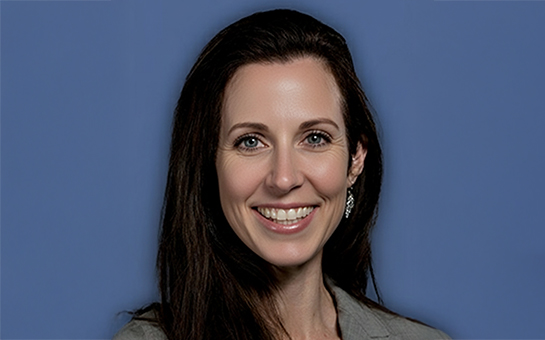
One of the visiting experts, Diedre Reitz, a UC Davis cancer biologist, shared how she studies genetic mutations in tumor cells using donated tissue samples. Student Ava Allen asked about the process and was fascinated to learn that Reitz can begin analyzing a tumor the same day she receives it, with results in about two weeks.
Reitz said she was pleased to participate in the day in the classroom, “I wanted to give back and show high school students that you don’t have to be an MD to fight cancer.”
But it wasn’t just the science that resonated. When Allen asked Reitz about her life outside the lab, she learned that the researcher enjoys hiking and spending time with her husband and toddler. “I realize how important it is to be a researcher,” Allen said, “but I’m glad to hear she is a mom, too. I want to be a mother as well someday.”
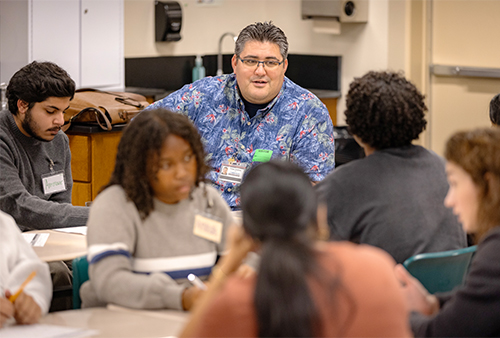
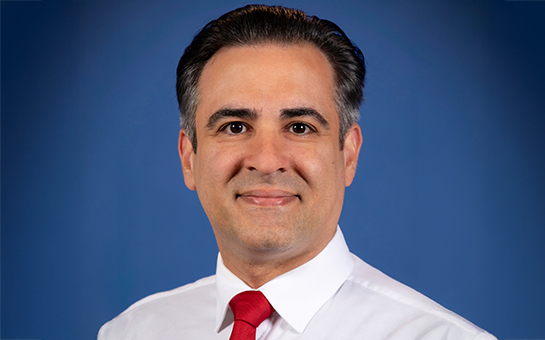
Another guest, Felipe Godinez, a UC Davis biomedical researcher, captivated students with his work using artificial intelligence (AI) to distinguish between malignant and benign tumors. “With the knowledge I now have, I wish I were in your seats,” he told the class.
Student Amun Wedderburn was inspired. “I’m learning there are lots of different aspects of biomedicine and that AI could give me a way to give back to the community.”
Fellow student Matt Kandoth asked Godinez if he gets a regular paycheck or if his salary depends on research grants.
“Every faculty member at UC Davis teaches. If you get research funding, it means you get to spend more time focused on your research,” Godinez explained.
Kandoth followed up with questions related to Godinez’s years spent in college and the degrees he obtained.
“With programs like this, the future of cancer research isn’t just in labs — it’s growing in classrooms, one motivated student at a time,” said cancer center oncologist Janai Carr-Ascher, who is the faculty leader for the Cancer Research Immersion Academy.
A teacher’s dream come true
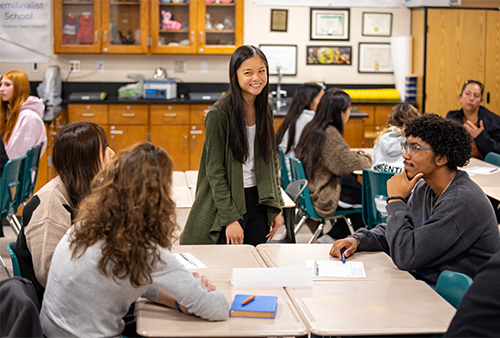
For Sheldon High science teacher Tabitha Lai, this is more than a program — it’s personal. A Sheldon alum herself, Lai discovered her love for science in the very classroom where she now teaches. She went on to earn a biotechnology degree from UC Davis and a master’s in multicultural education from Sacramento State University.
“My hopes and dreams are that these students will pursue whatever career path they want and not be boxed in by society’s expectations,” Lai said. “There are so many exciting opportunities in science and you don’t need a medical or biotechnology degree to make a difference.”
Building bridges to the future
The Cancer Research Immersion Academy is part of a broader effort to create a pipeline for future cancer care providers and researchers, with these high school students hopefully applying to UC Davis or Sacramento State in the near future. By integrating real-world, project-based learning into career technical education programs, the program helps students:
- Practice scientific research and communication
- Apply critical thinking and leadership skills
- Connect science to their personal experiences and communities
- Explore pathways to college and careers in biomedical research
High school teachers who want to bring this experience to their classrooms can email kasher@health.ucdavis.edu.