

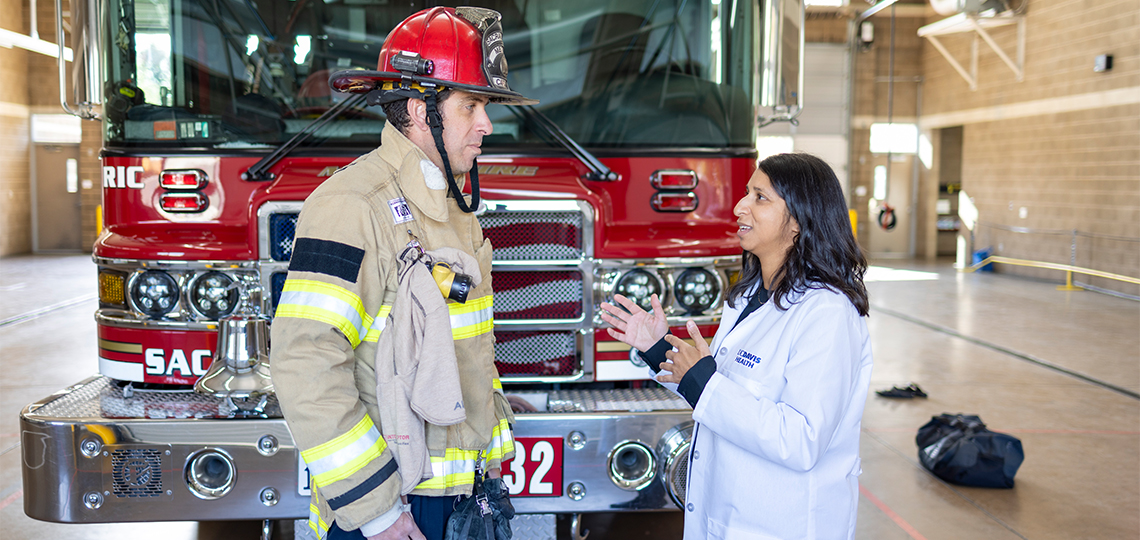
UC Davis Comprehensive Cancer Center and UCLA, in collaboration with CAL FIRE, will investigate how occupational exposures among firefighters may increase cancer risk. The $9.7 million project is a sub study of the California Firefighter Cancer Research Study. It will include 3,500 firefighters from departments across the state over a two-year period.
“Firefighters put themselves in harm’s way every day to protect our communities,” said Public Health Sciences Professor Shehnaz Hussain, who will lead the research for UC Davis. “This study is about giving back — using research to understand their risks and find ways to keep them healthier and safer.”
The Biomarkers of Acute Exposure sub study is funded by CAL FIRE and the University of California Office of the President. Researchers will analyze how exposures to smoke, chemicals and other hazards from firefighting may drive changes in the body that contribute to cancer risk over time. The UC research team is guided by a firefighter advisory board to ensure the study remains grounded in real-world needs and priorities.
“This vital study to understand and reduce cancer risks for firefighters gets to the heart of what UC researchers and scientists do best: save lives and keep our communities healthy and safe,” said UC President James B. Milliken. “As wildfires become more common across our state and nation, there’s an urgent need to support the firefighters who risk everything to save lives, homes, businesses and communities throughout California. UC is proud to partner with CAL FIRE on this important research.”
A specific area of focus will compare exposures and biological changes in firefighters who responded to the 2025 Eaton and Palisades fires in Los Angeles with those who did not.
“This research underscores CAL FIRE’s commitment to protecting firefighter health through science, innovation and partnership,” said CAL FIRE Director and Fire Chief Joe Tyler.
This research is part of a broader, multiagency effort to protect the health of those who protect our communities. By better understanding the relationship between biomarkers of exposure such as heavy metals and biomarkers of effect such as epigenetic alterations, transcriptomics and markers of inflammation and immune dysfunction, the team hopes to pave the way for new prevention and intervention strategies for firefighters nationwide.