
Services
Simulation Equipment
Task trainers, procedural trainers and high- and low-fidelity mannequins are part of our simulation-based education system, helping learners practice hands-on clinical skills safely before working with real patients.
-
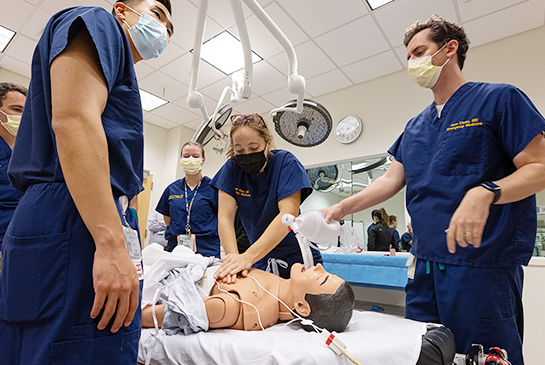
High-Fidelity Mannequins
Advanced computer-controlled simulators replicate real patient responses, allowing learners to practice complex scenarios, teamwork and clinical decision-making in a realistic environment. Common uses include emergency situations (e.g., cardiac arrest, trauma) and team-based training.
Controlled by software and instructors, they can simulate:
- Talking and speech impairment
- Breathing, heartbeat and body sounds
- Pulse and vital sign changes
- Bleeding and seizures
- Real-time responses to treatments and medications
-
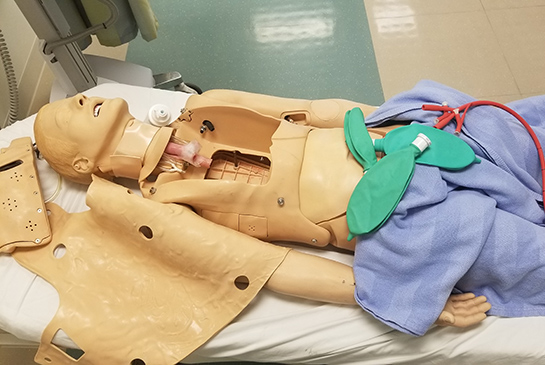
Low-Fidelity Mannequins
These mannequins provide learners with a safe, hands-on way to practice basic clinical skills such as CPR, basic airway management and patient positioning before progressing to more advanced simulations.
- No computer control
- Limited or no physiological responses
- Often, a single body part or a simple full-body model
-
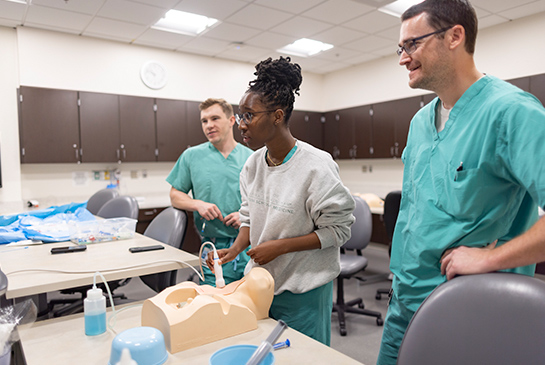
Procedural Trainers
These are made for hands-on simulation models that let learners practice entire medical procedures in a safe, controlled environment. They build technical proficiency and confidence before performing procedures on real patients.
- IV insertion
- Lumbar puncture
- Catheter placement
- Ultrasound-guided procedures
-
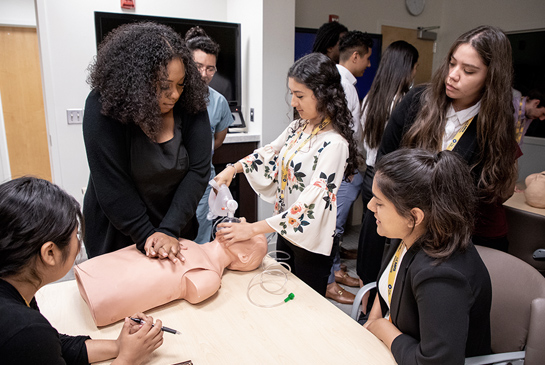
Task Trainers
Task trainers are physical models or simulators of specific body parts or functions used to practice a single clinical skill. They break complex care into small, repeatable tasks so learners can build confidence and muscle memory.
- Airway management
- CPR
- Injections and blood draws
- Lumbar punctures
- Suturing practice