Small Dose, Big Impact: Students explore wellness at work
(SACRAMENTO)
Two Cristo Rey High School students participating in the UC Davis Health work-study program with the Office for Health Equity by Design for Inclusive Excellence (HEDI) spent their end-of-year projects on a simple assignment: identify an opportunity to improve office culture or workplace efficiency.
Their focus stood out.
Rather than focusing solely on workflow, both students examined employee well-being — including stress, burnout, and the importance of feeling supported and connected at work.
Their projects reflect key UC Davis Principles of Community: compassion, respect and recognition of the dignity of every person. Through observation, they explored how small, intentional actions can improve morale and strengthen workplace culture.
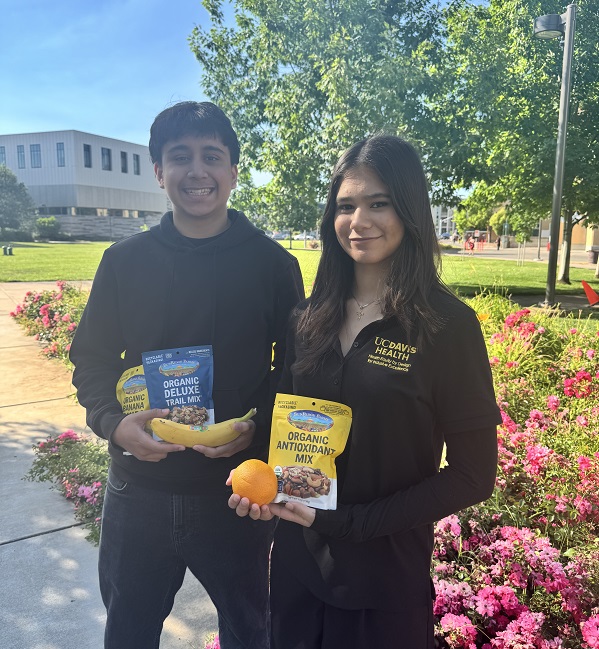
Layah Perez focused on how nutrition and brain-supportive snacks can improve focus and energy in high-stress environments. She wrote that offering healthier options can help employees feel their well-being is valued and considered. She also noted that small details — such as thoughtfully selecting snacks — can signal care and support.
Cristo Rey High School students Emanuel Hernandez and Layah Perez stand outside on the UC Davis Health campus, holding fruit and packaged trail mix.
Emanuel Hernandez developed a project titled Small Apples, Big Impact: A Three-Step Plan to Reduce Stress in the Office, inspired by a simple interaction.
“One colleague brought a tiny apple for another colleague,” he wrote. “The apple was so small, but the joy it sparked was huge.”
He connected that moment to a broader idea: intentional, everyday gestures can reduce stress and help people feel connected.
“The level of thoughtfulness and emotional intelligence these students demonstrated was genuinely inspiring,” said Matthew St. Amant, assistant director with HEDI. “They looked beyond processes and paid attention to how employees feel and how small acts of care can shape culture and belonging.”
Together, the projects underscore that inclusive excellence is built not only through large initiatives but also through everyday moments of empathy and support.
The Cristo Rey work-study partnership continues to highlight the value students bring to professional environments, offering fresh perspectives that contribute to workplace culture and community.