UC Davis Mini Medical School holds annual Healthy Aging Forum
(SACRAMENTO)
As Sacramento’s population ages, the need for accessible, age-friendly care and resources continues to grow. UC Davis Health is committed to meeting this need by expanding access to care, improving quality of life and making the health system easier for the community to navigate.
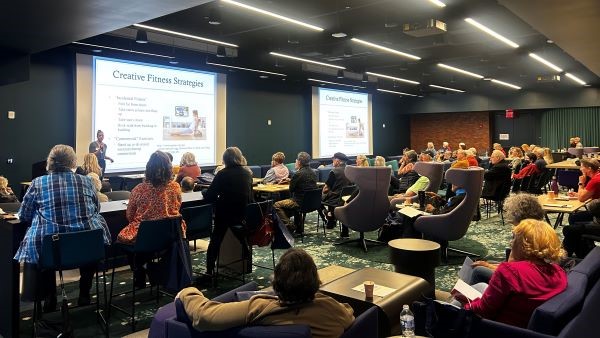
Community members who attended the Healthy Aging Forum engaged in an interactive question and answer session featuring a panel of UC Davis experts in geriatric medicine.
“We are proud that our nationally recognized experts can provide our community with prevention and lifestyle strategies that will help them maintain their independence and quality of life as they age,” said Katren Tyler, faculty director for the Mini Medical School, vice chair for Geriatric Emergency Medicine and Wellness and a clinical professor in the Department of Emergency Medicine. “UC Davis’ Mini Medical school gives our community practical ways to apply the latest research to improve their physical, mental and overall well-being.”
Rachel Whitmer, co-director of the UC Davis Alzheimer's Disease Research Center, presented the results of the U.S. POINTER Study, a large clinical trial demonstrating how lifestyle programs can improve cognition in older adults. UC Davis Health is one of only six U.S. academic and health care systems that conducted the study in partnership with the Alzheimer’s Association.
Other key topics included how meaning and purpose support overall well-being and the value of mobility and exercise for longevity, including practical advice and activities for a wide range of abilities.
“Sharing UC Davis Health’s research findings in a way that’s practical and engaging helps us empower our community to take an active role in their long-term well-being,” said Tyler.
Community members who attended the event engaged in an interactive question and answer session featuring a panel of UC Davis experts in geriatric medicine.
Speakers included:
Deb Bakerjian: associate dean for practice and clinical professor in the Betty Irene Moore School of Nursing
Rebecca Boxer: division chief of Geriatrics, Hospice, and Palliative Medicine; clinical professor of Internal Medicine
Brandon Hassid: assistant clinical professor in the Department of Physical Medicine and Rehabilitation; assistant team physician for UC Davis Athletics
Jana Katz-Bell: senior assistant dean for strategic initiatives in the Betty Irene Moore School of Nursing and UC Davis School of Medicine
Katren Tyler: vice chair for Geriatric Emergency Medicine and Wellness; professor in the Department of Emergency Medicine
Brandee Waite: director of UC Davis Health Sports Medicine; professor in the Department of Physical Medicine and Rehabilitation
Rachel Whitmer: chief of the Division of Epidemiology; director of Population Brain Health Lab; co-director, UC Davis Alzheimer's Disease Research Center; professor in the Department of Public Health Sciences and Department of Neurology
Aliza Pham Wingo: professor of Psychiatry; psychiatrist, VA Northern California Health Care System
Thomas Wingo: associate director of the UC Davis Alzheimer's Disease Research Center; professor in the Department of Neurology
About UC Davis Healthy Aging Initiative
For more than 20 years, UC Davis Health experts have empowered older adults to proactively manage their health and maintain dignity, independence and well-being as they age.
The Healthy Aging Forum and the Mini Medical School are part of UC Davis Health’s Healthy Aging Initiative. Each year, the Mini Medical School offers free online classes led by UC Davis Health faculty and clinicians, sharing tips and best practices for healthy aging.