

Commitment to Quality and Safety
If you have feedback or concerns about your care or safety, our Patient Relations department is available to listen and help at 916-734-9777 or 800-305-6540.
Quality Improvement and Patient Safety

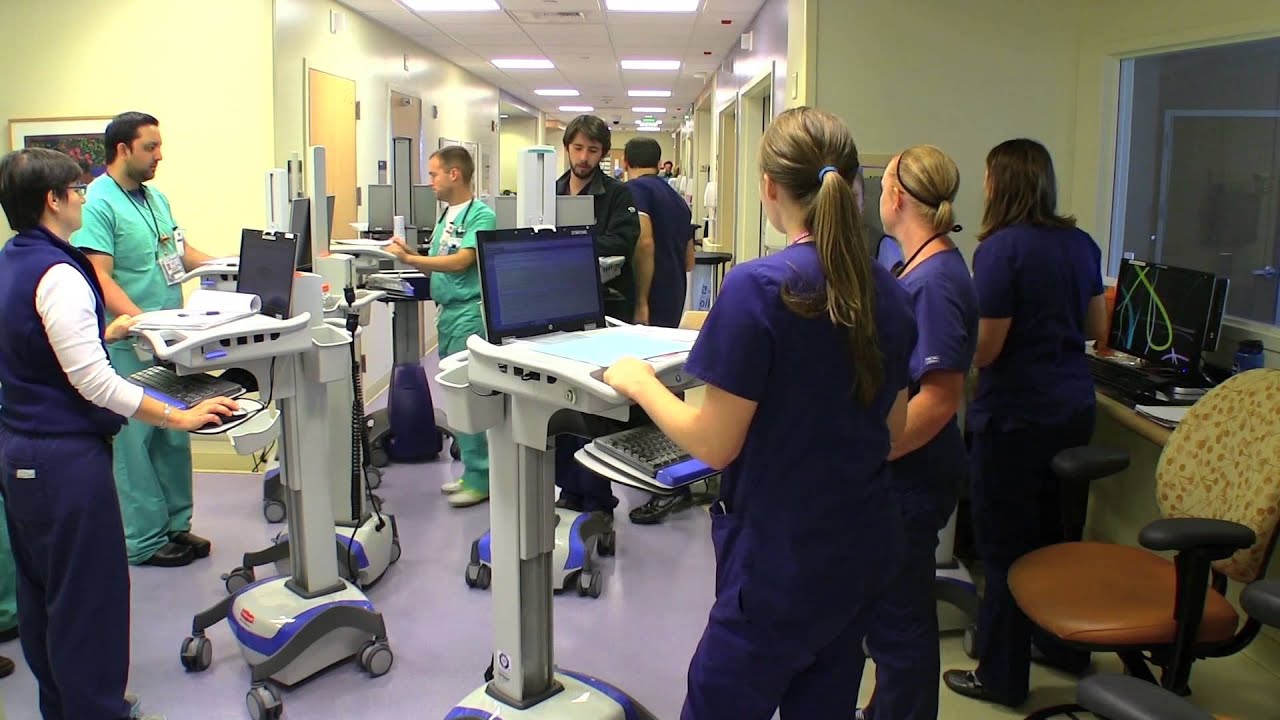
The Institute of Medicine’s landmark 1999 report, To Err is Human, attributed medical errors to 98,000 preventable deaths annually in U.S. hospitals; subsequent analysis estimated over 210,000 preventable deaths. Emphasis has been placed on systems-based practice and practice-based learning to promote patient safety and quality care. Within graduate medical education, the Accreditation Council for Graduate Medical Education requires residents to participate in quality improvement and patient safety programs. The UC Davis Health Graduate Medical Education Office offers educational programs in quality improvement and patient safety for a range of learning levels. Our aim is to develop curricula to advocate for high quality and safe care, model effective care, promote high value care, enable clinicians to effectively work within interprofessional teams, identify system errors, implement potential systems solutions, and foster a culture of patient safety.
The following are some of our current Graduate Medical Education (GME) Quality and Patient Safety Initiatives for residents, fellows, and their supervising faculty members:
- Quality Improvement and Patient Safety Office Hours
- GME High Value Competition Award (Employee Access Only)
- GME Good Catch Award
- Hospital and Clinic-Based Quality Improvement and Patient Safety Projects
- Basic Quality Improvement and Patient Safety Training web series (6 hours)
- 4-Day Quality Improvement Workshop
- UC Davis Annual Quality Forum

Ulfat Shaikh, M.D., M.P.H., M.S.
Medical Director for Healthcare Quality
Professor of Pediatrics
QI/PS Learning Modules
Healthcare quality improvement and patient safety are foundational skills for physicians in training, shaping how they deliver safe, effective, and equitable care throughout their careers. As healthcare systems grow more complex, clinicians must be equipped not only to treat individual patients, but also to recognize system risks, prevent harm, and lead meaningful improvement. This course introduces trainees to the core principles of quality improvement and patient safety using practical, real-world examples. Learners explore key topics such as systems thinking, patient safety adverse events, measurement for improvement, and person-centered care. The course covers essential methodologies, including Plan-Do-Study-Act cycles, root cause analysis, and run charts, while highlighting how data, teamwork, and communication drive safer care. Through case studies and activities, participants learn to identify safety threats, design improvement projects, and apply quality improvement tools in clinical settings. By the end of the course, physicians in training gain the confidence and skills to actively improve care quality, reduce harm, and contribute to a culture of safety in their organizations.
Preventable harm to patients is unfortunately prevalent at all sites of care, including inpatient, ambulatory, and long-term-care settings. Improving safety requires acknowledging the scope of the problem and understanding why a systems approach is used to understand the causes of medical errors and safety failures. This includes recognizing that most errors result from flawed processes or systems of care, reflecting predictable human failings in the context of poorly designed systems. We will look at some ways for frontline clinicians to improve patient safety and will understand why promptly reporting patient safety concerns helps with system-wide learning and helps keep our patients safe at UC Davis Health.
Estimated duration: 20 Minutes
Have you ever stopped to think about what you are actually getting for the enormous amount of money we all spend on healthcare? This module explores what high-value healthcare looks like and how as frontline clinicians we can help make a difference in bringing down healthcare costs for our patients and their families. It starts with resource stewardship. It's not just about cutting costs. It’s about using evidence to make better decisions and making sure our time, money and energy are all pointed toward care that is proven to be effective and high value.
Estimated duration: 20 Minutes
Quality gaps affect every health care profession, every practice specialty, and potentially every patient. Our job as health care professionals is not only to provide care but also to improve care. Just as we learn to take a patient history, perform patient assessments and physical exams, and recommend and implement treatments for patients, we must also learn how to analyze and measure systems of care and recommend and implement system-level changes to improve those systems. In this module we explore how to identify areas that need improvement in health care settings, the critical role of teamwork, and a widely used model for making positive changes.
Estimated duration: 20 Minutes
Determining an area for improvement work is not always simple. Although there are many opportunities in health care to do improvement work, we must always be mindful of the needs of the people we serve. The three steps covered in this module—identifying an improvement area or opportunity, narrowing the focus, and creating a clear and focused (SMART) global aim statement—provide a framework to help us answer the first question in the Model for Improvement: “What are we trying to accomplish?” Creating a clear and focused global aim statement during the planning of an improvement project will save time and energy downstream and will keep the project focused as it moves forward. The aim statement serves as a summary of and a compass for the improvement project.
Estimated duration: 20 Minutes
Root cause analysis was initially developed to analyze industrial accidents and is now a widely used method to detect patient safety hazards in healthcare. The objectives of this module are to discuss the role of Root Cause Analysis in understanding adverse events in healthcare and to describe how to use the 5 Whys and Fishbone Diagram in conducting a Root Cause Analysis. The goal of Root Cause Analysis is to identify underlying system-level problems that increase the likelihood of adverse events and errors instead of focusing on mistakes by individuals. It uses a systems approach to identify active errors (problems at the interface between humans and a complex system) and latent errors (hidden issues within health care systems).
Estimated duration: 20 Minutes
As clinicians, we’re trained to diagnose and treat patients, but how often do we feel frustrated by the system around us? Learn why 'just trying harder' in healthcare isn’t a strategy. Process Literacy helps us understand how the culture and context of our clinical environment is the secret sauce to making changes that actually stick. The bridge between identifying a problem and actually fixing it is a deep understanding of your clinic or ward's process, culture, and system. By becoming process literate we stop accepting the system as it is and start becoming the person who improves it.
Estimated duration: 15 Minutes
This module looks at why data are necessary to improve health care, and the differences between data used for research, accountability, and improvement. We will examine why it’s important to understand the difference between common- and special-cause variation. Measurement alone does not improve care, but it is the foundation for it. And it is essential for informed decision making. Through applying these concepts, healthcare teams can move beyond static snapshots of performance to predict future outcomes and track if their quality improvement interventions lead to sustained progress.
Estimated duration: 20 Minutes
We have all been frustrated when a treatment plan does not work, especially when we have rigorously followed clinical guidelines and best practices. Today, we will move beyond individual patient care to talk about how we can change the systems we work in to make sure that our care works to keep people healthy. We will understand why health care is so complex and learn some tools to help us lead change in our own clinical setting. To navigate this complexity, we will learn how to use the Model for Improvement and iteratively test changes using Plan-Do-Study-Act (PDSA) cycles.
Estimated duration: 20 Minutes
TeamSTEPPS is a framework to improve our performance across the health care system, ensuring that every patient receives highly reliable, safe, and effective care. Developed by the AHRQ and the Department of Defense, the framework centers on four core competencies: communication, leadership, situation monitoring, and mutual support. It provides specific tools like SBAR, huddles, and the CUS technique to streamline information exchange and manage clinical risks. By fostering a shared mental model, TeamSTEPPS aims to reduce medical errors and ensure clinical care remains patient-centered and highly reliable.
Estimated duration: 30 minutes
This module covers spreading and sustaining healthcare improvements. It emphasizes that broad adoption of better practices, such as the teach-back method or hand hygiene protocols, requires a deliberate spread plan led by executive sponsors and dedicated teams. You will learn why successful initiatives rely on aligning improvements with strategic goals and removing barriers. Engaging staff, trainees, and patients, is essential for accelerating safety and quality across the care continuum.
Estimated duration: 20 Minutes
This module will help you understand the importance of dissemination for spreading improvements, how to apply SQUIRE guidelines for scholarship, and how to determine the necessity of IRB oversight. Effective dissemination involves sharing project results through internal huddles or external venues like conferences via abstracts, posters, and oral presentations. The SQUIRE framework enhances reporting transparency and rigor by emphasizing unique elements such as rationale, context, and the study of interventions. Learn why sharing improvement work, including both successes and failures, is essential to advancing healthcare improvement.
Estimated duration: 20 Minutes