Meet the Researcher
Sasha Shafikhani, Ph.D.
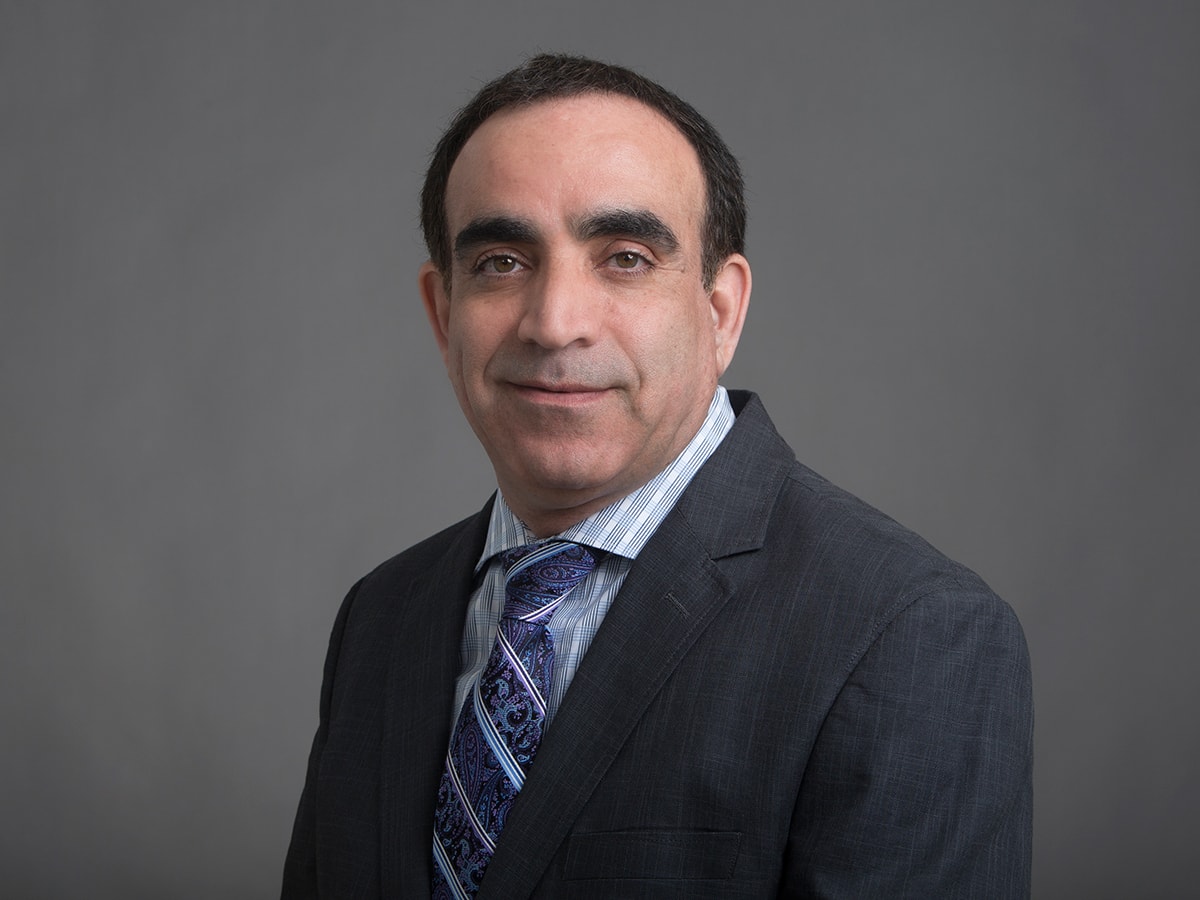
Professor and Director of Microbiome Research
Education and Professional Memberships
Undergraduate Education
University of California, Berkeley in Berkeley, California, B.A., Molecular Cell Biology, 1991
Graduate Education
University of California, Berkeley in Berkeley, California, Ph.D., Microbiology, 2001
Fellowship
University of California, San Francisco in San Francisco, California, Infectious Diseases, 2008
- Wound Healing Society
- American Society for Microbiology
- American Society for Cell Biology
Selected Peer-Reviewed Publications
See all publications by Shafikhani »
Ruchi Roy, Foyez Mahmud, Janet Zayas, Timothy M. Kuzel, Jochen Reiser, & Sasha H. Shafikhani. Reduced Bioactive Microbial Products (PAMPs) Contribute to Dysregulated Immune Responses And Impaired Healing in Infected Wounds in Diabetic Mice. Journal of Investigative Dermatology. 2024, Feb;144(2):387-397.e11. PMID: 37619833. PMCID: PMC10840742; DOI: https://doi.org/10.1016/j.jid.2023.08.004.
Mohamed F. Mohamed, Kajal Gupta, Josef W. Goldufsky, Ruchi Roy, Lauren T. Callaghan, Dawn M. Wetzel, Timothy M. Kuzel, Jochen Reiser & Sasha H. Shafikhani. CrkII/Abl phosphorylation cascade is critical for NLRC4 inflammasome activity and is blocked by Pseudomonas ExoT. Nature Communications. 2022 Mar 11. 13(1):1295. doi: 10.1038/s41467-022-28967-5. PMID: 35277504. PMCID: PMC8917168.
Ruchi Roy, Janet Zayas, Sunil K. Singh, Kaylee Delgado, Stephen J. Wood, Mohamed F. Mohamed, Dulce M. Frausto, Yasmeen A. Albalawi, Thea P. Price, Ricardo Estupinian , Eileena F. Giurini, Timothy M. Kuzel, Andrew Zloza, Jochen Reiser, & Sasha H Shafikhani. Overriding impaired FPR chemotaxis signaling in diabetic neutrophil stimulates infection control in murine diabetic wound. eLife. 2022, Feb 3. 11:e72071. doi: 10.7554/eLife.72071. PMID: 35112667. PMCID: PMC8846594.
Ruchi Roy, Janet Zayas, Mohamed F. Mohamed, Mohammad Bayat, Timothy M. Kuzel, Jochen Reiser & Sasha H. Shafikhani. IL-10 Dysregulation underlies Global Chemokine Insufficiency, Delayed Macrophage Response, and Impaired Healing in Diabetic Wound. Journal of Investigative Dermatology. 2022 Mar. 142(3 Pt A):692-704.e14. doi: 10.1016/j.jid.2021.08.428. Epub 2021 Sep 10. PMID: 34517005. PMCID: PMC8860852.
Kajal H. Gupta, Josef W. Goldufsky, Stephen J. Wood, Nicholas J. Tardi, Gayathri S. Moorthy, Douglas Z. Gilbert, Janet P. Zayas, Eunsil Hahm, Mehmet M. Altintas, Jochen Reiser, & Sasha H. Shafikhani. Apoptosis and compensatory proliferation signaling are coupled by CrkI-containing microvesicles. Developmental Cell. 2017, Jun 19. 41(6):674-684.e5. PMID: 28633020, PMCID: PMC5533184. doi: 10.1016/j.devcel.2017.05.014.