
Robotic Surgery
Your well-being matters, so we offer leading-edge robotic surgery options that help you heal as quickly as possible.
Medically reviewed by Ankit Sarin, M.D. and Mohamed Ali, M.D. on March 02, 2026.
Robotic Surgery Experts to Help You Recover Quicker
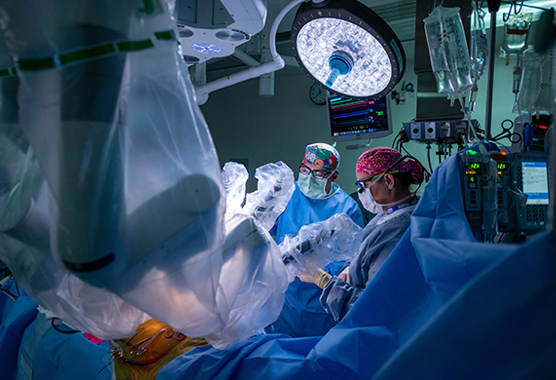
Robotic-assisted surgery is a surgical technique that uses a robotic system to perform the operation. Your surgeon controls every step of your surgery using slim, sophisticated tools that allow for the smallest possible incisions.
UC Davis Health surgeons are experts in robotic-assisted surgery. You can trust our team to provide state-of-the-art surgical care with a compassionate approach. Robotic technology allows us to minimize pain and make your recovery shorter, because your health and comfort are at the center of everything we do.
On this page
Request an Appointment
As Sacramento's No. 1 hospital, you'll benefit from unique advantages in primary care and specialty care. This includes prevention, diagnosis and treatment options from experts in 150 specialties.
Referring Physicians
To refer a patient, submit an electronic referral form or call.
Patients
Call to make an appointment.
Consumer Resource Center
Types of Robotic Surgery
In robotic-assisted surgery, your surgeon controls slim robotic instruments, using them to deliver precise results. Your surgeon is by your bedside throughout the procedure, carefully controlling each delicate movement of the tools.
Types of robotic surgery include:
Cardiothoracic Robotic Surgery
We treat a range of heart, blood vessel and thoracic (chest) diseases using cardiothoracic robotic surgery. With our techniques, you receive the benefits of traditional open-heart and cardiothoracic surgery without making cuts to your ribs or sternum (breastbone).
Colorectal Robotic Surgery
Our colorectal surgery experts have advanced training in robotic-assisted surgery. We provide expert surgical treatment for colon and rectal cancer, inflammatory bowel disease and rectal prolapse.
Gastrointestinal Robotic Surgery
Surgery for gastrointestinal (digestive) conditions requires precision around delicate organs in your chest and abdomen. We offer gastrointestinal robotic surgery for gallbladder removal, hiatal hernia, reflux, achalasia and all body wall hernias.
Gynecologic Robotic Surgery
Our surgeons have specialized training in gynecologic robotic surgery, including gynecologic robotic hysterectomy. We treat cancers of the cervix, ovaries and uterus, as well as noncancerous uterine conditions.
Neurological Robotic Surgery
We offer leading-edge neurological robotic surgery for complex cranium, spine and endovascular conditions. Our surgeons treat aneurysms, brain and spinal cord cancer, epilepsy, stroke and scoliosis using the most advanced techniques.
Orthopaedic Robotic Surgery
Our orthopaedic specialists are experts in robotic-assisted procedures. They perform hip and knee replacements, and reverse shoulder replacement using the latest systems, including Mako SmartRobotics™. This innovative approach results in a more tailored, minimally invasive experience, with the potential for quicker recovery and a longer-lasting implant.
Otolaryngologic Robotic Surgery
We were the first in Northern California to offer head and neck robotic surgery and continue to be leaders in this specialty. Our robotic techniques let us treat tumors of the pharynx, larynx and epiglottis without traditional surgery.
Urologic Robotic Surgery
Our urologic surgery program offers advanced techniques for urologic conditions, including kidney cancer and prostate cancer. We offer robotic-assisted prostatectomy that removes the prostate through keyhole-size incisions, resulting in less scarring and pain.
Benefits of Robotic Surgery
Robotic surgery has many benefits, including:
Controlled, steady movements
Your surgeon has complete control over the robotic arms, which stay steady even during long and difficult surgeries. The robotic arms can also turn and move through tiny incisions rather than the big incisions required to get human hands into the surgical site.
Tiny incisions
Some areas of the body are hard to reach, but slim robotic tools can often get to them easily. This means you don’t need a large incision, even for complex procedures.
3-D view inside the body
Your surgeon uses a real-time, 3-D camera throughout your robotic-assisted surgery. With this tool, they use powerful magnification to view the tiniest details, resulting in pinpoint precision.
Conditions
What to Expect With Robotic Surgery
You’re in expert hands with the surgeons at UC Davis Health. Our robotic surgery procedures offer a shorter, easier recovery with less pain and chance of infections. In general, you can expect:
-

Before Your Surgery
We know you may have questions and concerns before surgery and we’re here to address them. Our team will also provide clear instructions on how to prepare for your procedure.
-
Day of Your Surgery
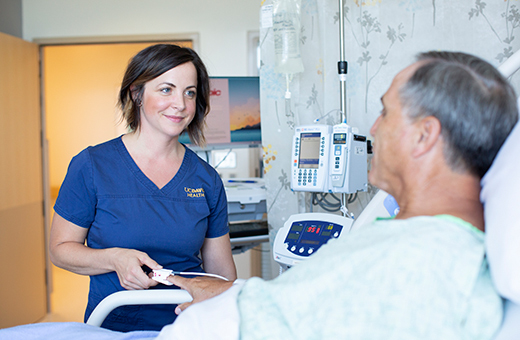
On the day of your surgery, one of our team members will greet you and escort you to a surgery preparation area. After you change into a gown, we provide warm blankets and help you get comfortable. Your team may insert an intravenous (IV) line in your arm for hydration, anesthesia and other medications.
-

After Your Surgery
When you wake up from your sedation or anesthesia, you will be in a comfortable recovery area. Here, we gently help you wake up. You may notice that your incisions are small. You also have less pain than you would have with traditional surgery. After you’re fully awake, we will move you to a regular room in the hospital for recovery or help you get ready to go home. If you are going home we will explain follow up care.
Robotic Surgery FAQs
Our surgeons are highly experienced in using da Vinci robotic-assisted systems to treat a variety of conditions. Surgical robots are operating-room machines that are controlled by skilled surgeons. The surgeons use hand and foot controls to manipulate mechanical arms from a console in the operating room.
UC Davis Health recently added the ExcelsiusGPS to its robotics surgery program. This system, which combines advanced imaging and navigation technology, is only used by our neurosurgeons for precise placement of screws during spinal stabilization surgery.
Working from a console in the operating room, our surgeons operate several precision-guided robotic arms that manipulate tiny instruments inserted through keyhole-sized incisions. A small video camera provides surgeons with magnified 3D images of the operation site. This expansive view allows surgeons to see and avoid surrounding nerves and muscles. The robotic arms, which can rotate 360 degrees, enable surgical instruments to be moved with greater precision, flexibility and range of motion than in standard minimally invasive laparoscopy.
Most procedures take two to three hours under general anesthesia. Patients typically experience only minimal blood loss. Blood transfusions are rarely needed. Depending on the condition being treated, patients often only spend one night in the hospital. They are usually discharged as soon as their lab tests are acceptable, their pain is controlled, and they are able to keep liquids down.
Robotics procedures, and minimally invasive surgeries in general, involve smaller incisions than traditional “open” surgeries. These robotic surgeries reduce blood loss and recovery times. Patients also typically experience much less pain than conventional “open incision” procedures.
Traditional open surgery can require several days of hospitalization and recovery time can last several months. While every case is unique, the return to everyday activities (except for lifting heavy objects and strenuous exercise) after robotic-assisted surgery can occur in as little as two to three weeks.
The use of robotic equipment in surgery means a more precise, less disruptive procedure, This helps control potential sources of bleeding.
As with any major surgery performed under general anesthesia, there is some risk, including heart attack, stroke and death. Preoperative assessment of a patient’s overall health is part of the standard surgical evaluation at UC Davis Health.
The decision to surgically treat a patient involves many considerations. Not every patient is a candidate for robotics or other type of minimally invasive surgery. UC Davis Health surgeons work closely with their patients to discuss options and help decide which treatment is best.
Awards and Recognitions

Ranked among the nation’s best hospitals
A U.S. News & World Report best hospital in cardiology, heart & vascular surgery, diabetes & endocrinology, ENT, geriatrics, neurology & neurosurgery, and pulmonology & lung surgery.

Ranked among the nation’s best children’s hospitals
U.S. News & World Report ranked UC Davis Children’s Hospital among the best in pediatric nephrology, orthopedics*, and pulmonology & lung surgery. (*Together with Shriners Children’s Northern California)

Ranked Sacramento’s #1 hospital
Ranked Sacramento’s #1 hospital by U.S. News, and high-performing in aortic valve surgery, back surgery (spinal fusion), COPD, colon cancer surgery, diabetes, gynecological cancer surgery, heart arrhythmia, heart failure, kidney failure, leukemia, lymphoma & myeloma, lung cancer surgery, pacemaker implantation, pneumonia, prostate cancer surgery, stroke, TAVR, cancer, orthopedics, gastroenterology & GI surgery, and urology.
The nation’s highest nursing honor
UC Davis Medical Center has received Magnet® recognition, the nation’s highest honor for nursing excellence.

World-class cancer care
One of ~59 U.S. cancer centers designated “comprehensive” by the National Cancer Institute.

A leader in health care equality
For the 13th consecutive year, UC Davis Medical Center has been recognized as an LGBTQ+ Healthcare Equality Leader by the educational arm of America’s largest civil rights organization.
Latest Surgery News
-
APRIL 29, 2026
UC Davis among the nation’s top liver transplant programs
-
MARCH 04, 2026
Teenage daughter’s bone marrow saves dad’s life
-
FEBRUARY 26, 2026
Stem cell treatment for spina bifida is safe, study finds
-
JANUARY 15, 2026
Pregnant woman hit by car, UC Davis care team saves lives