


What is Sickle Cell Disease?
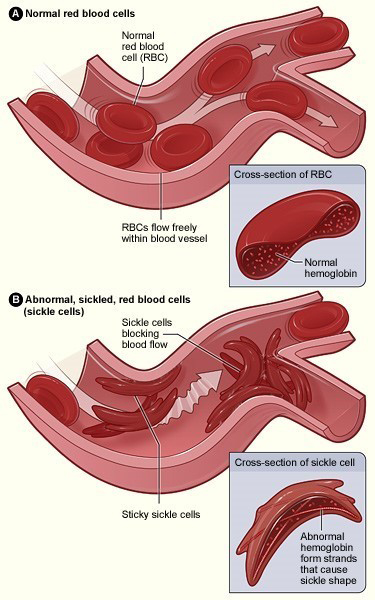
Sickle cell disease (SCD) is an inherited blood disorder caused by a change in the gene that helps make hemoglobin — the protein in red blood cells that carries oxygen. This change causes some red blood cells to become stiff, sticky, and “sickle” shaped instead of soft and round.
Sickle shaped cells can block small blood vessels, reducing blood flow and oxygen. This can cause pain, organ damage and other serious health problems.
Who Is Affected?
SCD is the most common genetic disorder in the United States, affecting about 100,000 people. A person develops SCD only if they inherit the sickle cell gene from both biological parents.
If someone inherits the gene from one parent, they have sickle cell trait (SCT). People with SCT usually have no symptoms but can pass the gene to their children.
If someone inherits the gene from one parent, they have sickle cell trait (SCT). People with SCT usually have no symptoms but can pass the gene to their children.
Certain groups are more impacted:
- About 1 in 13 Black/African American babies are born with SCT.
- About 1 in 163,000 Latino babies are born with SCT.
Living With Sickle Cell Disease
Years ago, people with SCD often did not live into adulthood. Thanks to better care — including preventive antibiotics, vaccines and medications such as hydroxyurea — many people with SCD now live well into adulthood and older age.
Ongoing research at UC Davis and at other institutions is improving treatments and offering new hope for those living with the disease.
For more information, go to the Centers for Disease Control’s “About Sickle Cell Disease” to learn about the disease.


