UC Davis School of Medicine ranks among top U.S. schools
By Edwin Garcia and Nadine A Yehya
School maintains top-tier status in primary care training and strong research funding, according to U.S. News
(SACRAMENTO)
The UC Davis School of Medicine is among the top in the nation for educating primary care physicians and remains a high performer in research funding. That’s according to data released by U.S. News & World Report.
In the publication’s 2026 Best Graduate Schools issue, in the medical school category, UC Davis ranks in the top tier nationwide for primary care medical education and in the second tier for research.
For many years, U.S. News assigned numerical rankings to institutions for these two categories, but it now groups schools into four tiers. Last year, UC Davis was also ranked in Tier 1 for primary care and Tier 2 for research.
“This year’s rankings underscore our school’s longstanding leadership in training physicians committed to serving all of California’s communities, while also advancing groundbreaking research that is transforming the lives of patients worldwide,” said Susan Murin, dean of the UC Davis School of Medicine.
That commitment extends to rural and medically underserved areas where patients face barriers to access primary care doctors.
The U.S. News ranking also reflects the school’s ongoing success in research funding. This has brought national attention to its dedication to study diseases, develop new treatments, improve patient care and test new medical technologies.
In addition to the tiered rankings, the school was listed as No. 16 in the category of most graduates practicing in primary care (up from No. 17 the year before).
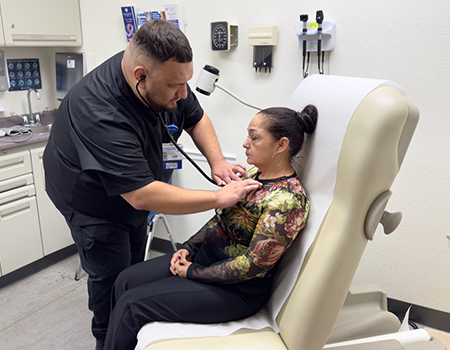
Many UC Davis medical students gain experience in primary care medicine while caring for patients at student-run clinics.
Primary care: A priority since the school’s creation
Primary care is the bedrock of the health care delivery system. It includes the fields of family medicine, pediatrics and internal medicine. Primary care providers are responsible for coordinating a patient’s care, managing their chronic conditions and helping them prevent diseases.
Training students to become primary care doctors has long been a core component of the medical school.
UC Davis School of Medicine was approved by the California Legislature in the 1960s with a mandate to produce more primary care physicians to help fill workforce shortages.
“Historically, there’s always been this unique, strong culture and emphasis to admit students with interests in primary care,” said Mark Servis, the medical school’s vice dean for medical education. “UC Davis offers more clinical rotations in primary care settings for students than most schools in the country.”
Students also gain primary care experience through volunteering: Hundreds of medical students and UC Davis undergraduates are involved in about a dozen student-run clinics. These clinics provide care to uninsured and underinsured Sacramento-area residents.
The medical school has also created numerous academic tracks, or pathways, to serve specific populations and regions of the state, most often in primary care settings.
Among the pathways is ACE-PC, a fast-paced program that allows medical students committed to primary care to complete school in three years instead of four — the only such program in California. Recently, the pathway, formally known as Accelerated Competency-based Education in Primary Care, added a psychiatry component, called Rural ACE-PCP.
“The UC Davis primary care ranking highlights the institution’s commitment to health equity and community well-being, and it reflects how seriously the school takes its responsibility to the communities it serves,” said Alicia González-Flores, executive director of ACE-PC. She is also an internal medicine physician.
She added: “It is deeply fulfilling to work at a school that places primary care at the heart of its mission and as a core expression of its values and responsibility to our communities.”
Servis said the school’s focus on primary care training will continue to benefit communities across California.
“The investments we've made in the last dozen years,” he said, “are going to continue to pay off in terms of graduates going into the right places to meet health care disparities and needs.”
Research funding leads to scientific breakthroughs
The Tier 2 U.S. News ranking for research highlights a School of Medicine priority that is driving innovation and transforming the health of Californians.
U.S. News uses multiple indicators to assess research rankings. They include the school’s total research funding, National Institutes of Health (NIH) funding and research productivity per faculty member.
This year, UC Davis School of Medicine was ranked among the nation’s leading medical schools in terms of NIH research funding. In the latest report by Blue Ridge Institute for Medical Research, the medical school placed 31st nationally, with a record total of $233 million in NIH grants. Twelve departments ranked in the top 20 nationally in their fields, and two were in the top 10.
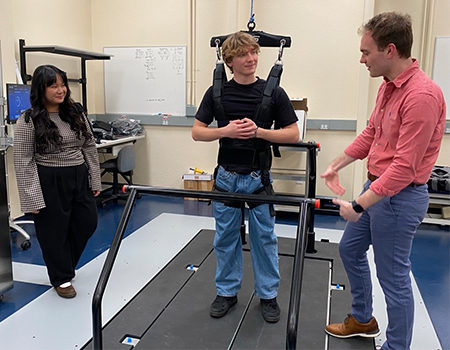
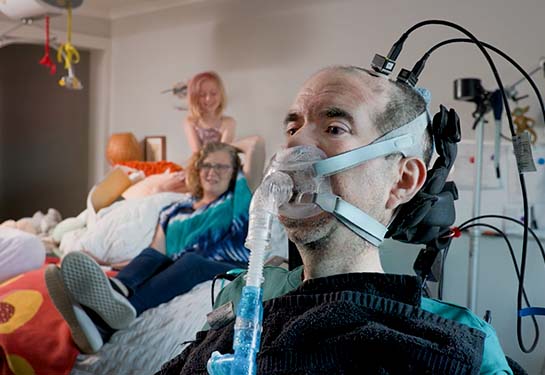
Professor Jonathan Calvert, an expert in neural engineering, is developing technologies for patients with spinal cord injury.
“We are delighted to be ranked in Tier 2 for research,” said Kim E. Barrett, vice dean for research and distinguished professor of physiology and membrane biology. “While our position is limited, to some extent, by the smaller size of our faculty compared to our competitor schools, we are proud of the substantial impact of our research programs and their translation into new treatments and cures as well as improvements in community health.”
The school’s Alzheimer’s Disease Research Center (ADRC) is home to some of the biggest NIH-funded clinical trials and studies on Alzheimer’s and other dementias. Professor Rachel Whitmer is the PI with the largest NIH funding at UC Davis and in public health sciences nationwide. She studies age-related dementia, cognitive impairment and brain pathology among different ethnic groups. Also, Distinguished Professor in the Department of Neurology Charles DeCarli is the PI on a $15.8 million grant to study brain aging in Hispanic-Latino community living in the United States.
School of Medicine researchers have been achieving national and global recognition for advancing scientific knowledge innovation.
A research team led by fetal surgeon Diana Farmer has safely performed the world’s first spina bifida treatment combining fetal surgery with stem cells. The results from the Phase 1 ongoing CuRe clinical trial have been published in The Lancet.
Research conducted at UC Davis Health has global impacts, too.
Researchers in the Department of Pathology and Laboratory Medicine have created a new tuberculosis (TB) blood test that can detect the active, infectious form of the disease. The discovery enables faster diagnosis and treatment. It also helps prevent the spread of TB by quickly identifying those who are contagious.