
Research
Current Research Projects
-
 See project details
Understanding and Reducing Stigma Against Persons with Substance Use Disorders
Stigma against those who use substances, from healthcare professionals, family, friends, the general community, and even themselves, is considered to be a major barrier to successful engagement in treatment. This project focuses on how to measure stigma among substance users and how to change it.
-
 See project detailsRead our Drug and Alcohol Dependence paper
Patterns and Trajectories Associated with Overdose in Patients Co-Prescribed Opioids and Benzodiazepines
This Centers for Disease Control and Prevention (CDC) funded project will use population data to examine factors leading to co-prescriptions of opioids and sedative medications which pose higher risk of overdose.
-
 See project details
Rigorous Evaluation of California Policies to Disseminate Emergency Department-based Services for Opioid Use Disorder
This project funded by the Centers for Disease Control and Prevention (CDC) seeks to help address the opioid overdose crisis by assessing CA Bridge, an initiative to expand medication for addiction treatment in emergency departments. CA Bridge uses an integrated treatment approach with the goal of boosting buprenorphine use rates among patients.
-
 See project details
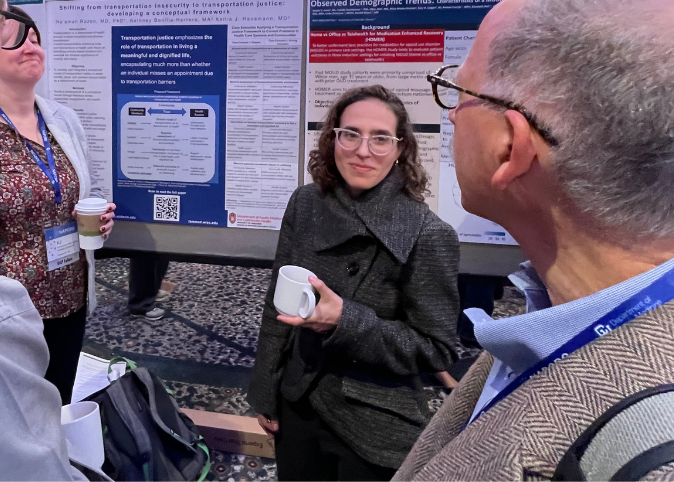
MOBILIZE: Mobility and Transportation Solutions to Improve Hemodialysis Access
People with end‑stage kidney disease rely on consistent, dependable transportation to attend their dialysis treatments. This work will generate essential data on the social risks experienced by dialysis patients and improve methods for assessing their transportation insecurity.
-
 See project details
A Multi-Team System Implementation Strategy to Improve Buprenorphine Adherence for Patients Who Initiate Treatment in the Emergency Department
An embedded study within in this National Institutes of Health (NIH) funded clinical trial is led by co-investigator Elizabeth Magnan, a professor of family medicine. Magnan is exploring the role of stigma in the context of efforts to improve long-term buprenorphine treatment rates. It focuses on low-income and other vulnerable patients who disproportionately seek opioid use disorder care in emergency departments.