
Breast Imaging
You’ll receive complete diagnostic and consultative services from compassionate doctors and technologists specializing in breast imaging care.
Medically reviewed by Shadi Aminololama-Shakeri, M.D. on May 04, 2026.
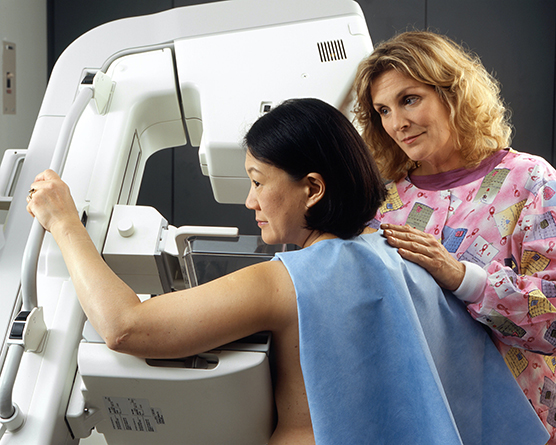
State-of-the-Art Medical Imaging for Complete Breast Health
Breast imaging uses medical technology to examine the inside of your breasts. Imaging helps us detect both cancerous and benign (non-cancerous) breast conditions.
The UC Davis Health Department of Radiology offers advanced diagnostic imaging tests to screen for breast cancer and detect abnormalities. Our dedicated breast imaging technologists and specialists ensure you receive an accurate exam and diagnosis.
On this page
Types of Breast Imaging
At UC Davis Health, we offer a full spectrum of breast imaging tests using advanced equipment and technology. Our highly trained technologists provide compassionate care and ensure you stay comfortable during your exam.
Digital Mammography
Digital mammography, also known as 2D mammography, uses a low-dose X-ray to take 2-dimensional pictures of your breast (from top to bottom and side to side). 2D mammograms can show breast cancer and other non-cancerous breast conditions like cysts or calcium deposits.
Tomosynthesis
Tomosynthesis, also known as 3D mammography, uses low-dose X-ray technology to take images of your breasts from different angles. Studies show tomosynthesis may pick up breast cancer and breast abnormalities better than 2D mammograms in patients who have dense breast tissue.
Breast MRI
A breast MRI creates detailed images of the inside of your breasts using radio waves and magnets. We may recommend an MRI along with a mammogram if you are at higher risk for breast cancer.
Breast Ultrasound
A breast ultrasound creates images of the inside of your breasts using sound waves. Ultrasound helps us determine if a breast lump is a fluid-filled cyst or a solid mass. It also helps us detect abnormalities in dense breast tissue that a mammogram might miss.
Contrast Enhanced Mammography
Contrast-enhanced mammography (CEM) is a specialized mammogram that uses a small amount of contrast material injected through a vein. This contrast helps show areas of increased blood flow, which can make certain findings easier to see. It may be recommended when a screening mammogram needs further evaluation or to look further when a patient or her provider notices a new finding in her breast. CEM can also be helpful in patients with dense breast tissue.
Request an Appointment
As Sacramento's No. 1 hospital, you'll benefit from unique advantages in primary care and specialty care. This includes prevention, diagnosis and treatment options from experts in 150 specialties.
Referring Physicians
To refer a patient, submit an electronic referral form or call.
Patients
Call to make an appointment.
Consumer Resource Center
When We Recommend Breast Imaging
We use breast imaging tests to examine a change in your breasts and to screen for cancer. We recommend annual mammograms for breast cancer screening starting at age 40. We may also recommend a breast ultrasound or MRI if you have dense breast tissue or experience breast cancer symptoms.
Learn what it means to have dense breasts and why screening is so critical
Preparing for a Mammogram
If you menstruate, try not to schedule your mammogram for the week before your period. Sore or swollen breasts can make the test uncomfortable.
-

The Day of Your Mammogram
You will need to undress above the waist before your exam (we will provide you with a wrap). Do not apply antiperspirant, powder, deodorant or lotion to your underarms or breasts. These products can show up on your X-ray and interfere with the images.
-
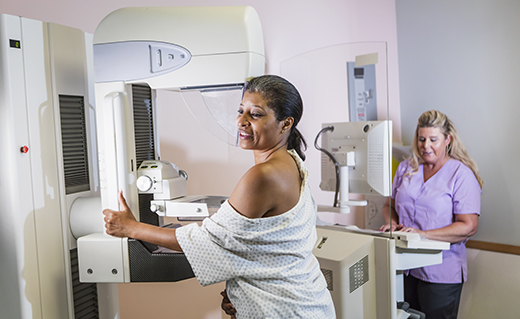
During Your Mammogram
You will stand in front of the X-ray machine, and your technologist will guide your breast into position. Two plates will compress your breast so the X-ray can get high-quality images. Your technologist will take images of your breast from different angles.
-

Getting Your Results
We will send your mammogram results to your provider. We will also provide you with a summary of your results within 30 days.
Additional Breast Imaging Testing
Sometimes, you will be asked to take another imaging test after your breast cancer screening has been read by a radiologist. Reasons for a follow-up imaging test include:
Breast Differences
The radiologist who analyzes your images may notice that an area of your breast looks different from other areas. They may want additional images of the area.
Suspicious Mass
Your radiologist may notice a finding (like a lump) in your breast that needs a closer examination.
Unclear Images
You may need another mammogram if images from your mammogram are not clear or more imaging is needed to see different areas of your breast more clearly.
“Mammogram Basics,” American Cancer Society, https://www.cancer.org/cancer/types/breast-cancer/screening-tests-and-early-detection/mammograms/mammogram-basics.html
Awards and Recognitions
Ranked among the nation’s best hospitals
A U.S. News & World Report best hospital in cardiology, heart & vascular surgery, diabetes & endocrinology, ENT, geriatrics, neurology & neurosurgery, and pulmonology & lung surgery.
Ranked among the nation’s best children’s hospitals
U.S. News & World Report ranked UC Davis Children’s Hospital among the best in pediatric nephrology, orthopedics*, and pulmonology & lung surgery. (*Together with Shriners Children’s Northern California)

Ranked Sacramento’s #1 hospital
Ranked Sacramento’s #1 hospital by U.S. News, and high-performing in aortic valve surgery, back surgery (spinal fusion), COPD, colon cancer surgery, diabetes, gynecological cancer surgery, heart arrhythmia, heart failure, kidney failure, leukemia, lymphoma & myeloma, lung cancer surgery, pacemaker implantation, pneumonia, prostate cancer surgery, stroke, TAVR, cancer, orthopedics, gastroenterology & GI surgery, and urology.

The nation’s highest nursing honor
UC Davis Medical Center has received Magnet® recognition, the nation’s highest honor for nursing excellence.

World-class cancer care
One of ~59 U.S. cancer centers designated “comprehensive” by the National Cancer Institute.

A leader in health care equality
For the 13th consecutive year, UC Davis Medical Center has been recognized as an LGBTQ+ Healthcare Equality Leader by the educational arm of America’s largest civil rights organization.
Latest News
