We prioritize local hiring, volunteering, purchasing, and investing to enhance the region’s economic health – providing opportunities for everyone from small businesses to construction contractors. Some examples:
Local Economy and Job Security
Targeted local hiring
Intentional hiring from traditionally overlooked zip codes contributes to job and income security, including for individuals who suffer from health disparities
Targeted local contracting
Connecting local and small businesses to contracting opportunities contributes to their growth
A regional economic powerhouse
Serving as a major driver of economic prosperity for both the Sacramento region and California
Some examples of our efforts:
OUR IMPACT
Spotlight: A regional economic powerhouse
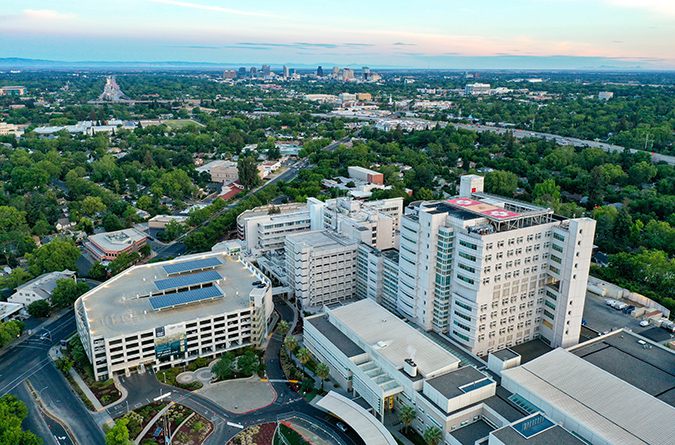
According to an economic snapshot study, UC Davis Health’s direct expenditures of $1.84 billion in 2023 led to a total economic impact of $4.01 billion in the seven-county Sacramento region, or an additional $1.18 for every dollar UC Davis Health spends.
UC Davis Health had 19,144 employees in the region, and the economic activity generated indirectly and by the spending of its employees supported an additional 11,050 jobs in the region.
The report also calculates UC Davis Health’s statewide economic and employment impacts, including from spending and hiring for academic research.
OUR IMPACT
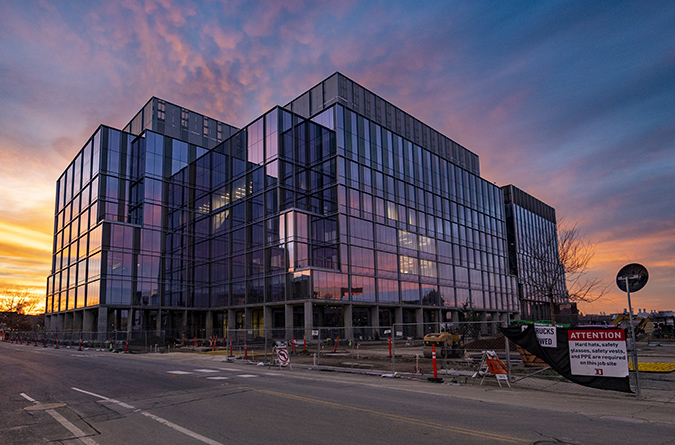
Spotlight: Aggie Square boosts economic impact
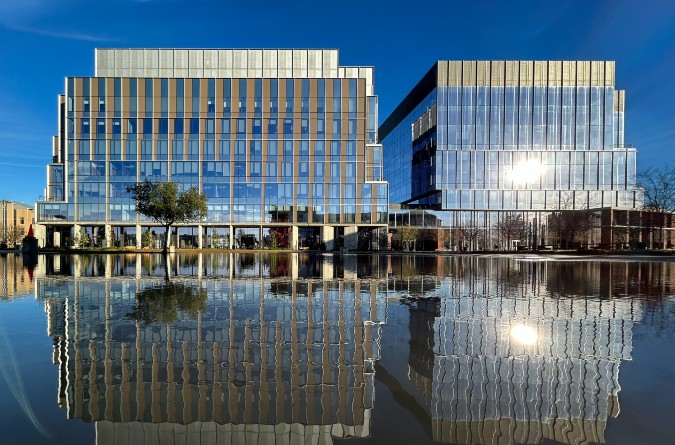
Aggie Square, the innovation district that opens its first phase on the university’s Sacramento campus in May, is expected to generate about $500 million in regional economic output and support 3,200 jobs annually when all phases are fully built out.
At completion, its construction is expected to be responsible for more than 12,100 construction-related jobs in the region, with an economic impact of $1.9 billion.
STRONG PARTNERS
Spotlight: Aggie Square community benefits
The Aggie Square project will co-locate business partners and community-based programs with UC Davis innovation and research. UC Davis, developer Wexford Science and Technology, and the city of Sacramento have agreed on a Community Benefits Partnership Agreement for the project based on input from local residents.
The agreement directs millions toward affordable housing in the neighborhood, thousands of jobs in construction and in the completed project, improvements to the Broadway and Stockton Boulevard corridors, and annual funding for community projects.
STRONG PARTNERS
Spotlight: Anchor Institution commitment
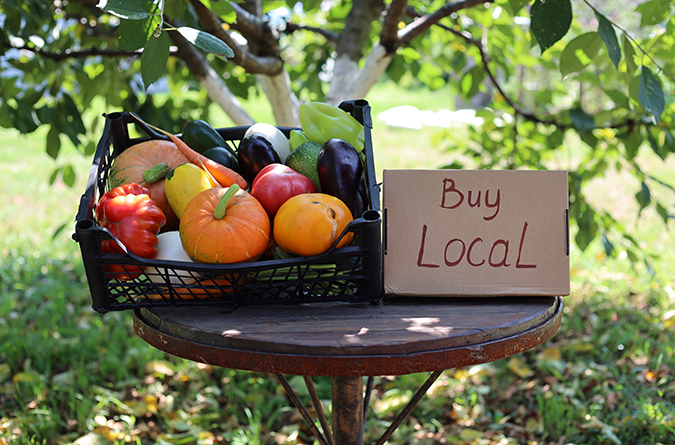
In 2020, UC Davis Health formally launched its Anchor Institution Mission (AIM) for Community Health. In partnership with the local community, UC Davis Health seeks to hire locally, volunteer locally, purchase locally, and invest locally.
For example, in the area of local workforce cultivation, over the past five years we’ve expanded outreach to underserved communities, collaborated with organizations to provide tailored guidance to job applicants, and launched programs that create new opportunities for employment and upskilling. In fiscal year 2024 we achieved a nearly 20% local hiring rate, an increase from less than14% when AIM started.
In the area of support for local, diverse businesses, we reported nearly $62 million in spending with small and diverse-owned suppliers in fiscal year 2023, an increase of 23% from the previous year. Also, local neighborhood spending accounted for more than $17 million. These outcomes represent significant progress toward supporting local business growth, especially in underserved areas.
More Believe in Better Highlights
Some recent examples of our ongoing efforts to advance health for all.
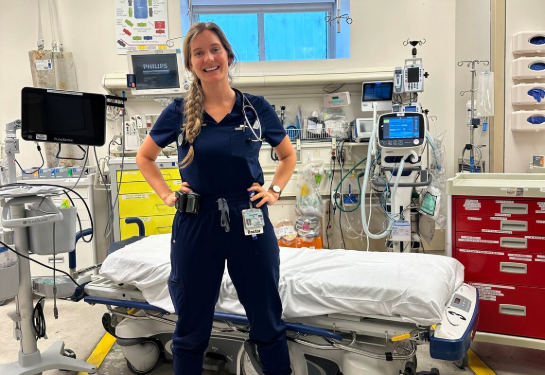
From the Emergency Department to the Capitol: A doctor’s impact beyond the bedside
Emergency physician Ellen Shank used a UC Davis Health policy fellowship to translate frontline experience into legislation that expands medication access and improves patient care.

UC Davis MIND Institute seeks research partners in the community
The UC Davis MIND Institute is partnering with community members to make sure research and care meet the needs of people with neurodevelopmental disabilities
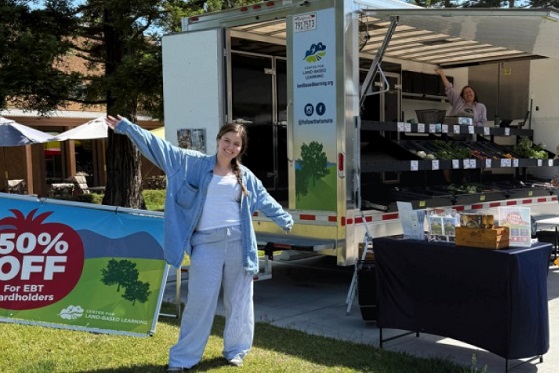
From farm to Aggie Square: Mobile market brings produce to campus
On select Wednesdays, something fresh is pulling into Aggie Square, and it’s more than just a truck full of produce.
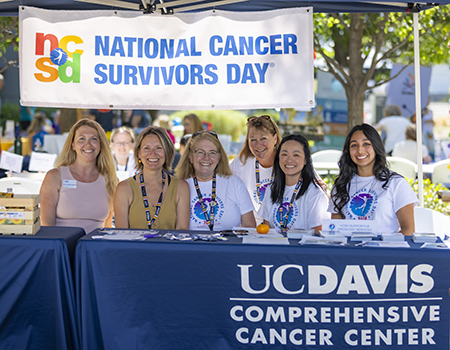
Cancer center honors strength and hope on National Cancer Survivors Day, June 4
The cancer center marks National Cancer Survivors Day on June 4, celebrating survivors and providing cancer experts offering guidance, support and resources.