Autism research in 2026: Strong and diverse, despite funding uncertainty
Christine Wu Nordahl shares what’s next in autism research, following a gathering of the world's top experts in the field
(SACRAMENTO)
More than 2,400 of the world’s top autism researchers from 75 countries recently gathered in Prague for the annual meeting of INSAR (the International Society for Autism Research). The 25th anniversary conference focused on many areas of autism science, and the UC Davis MIND Institute’s Christine Wu Nordahl played a major role in shaping the program.
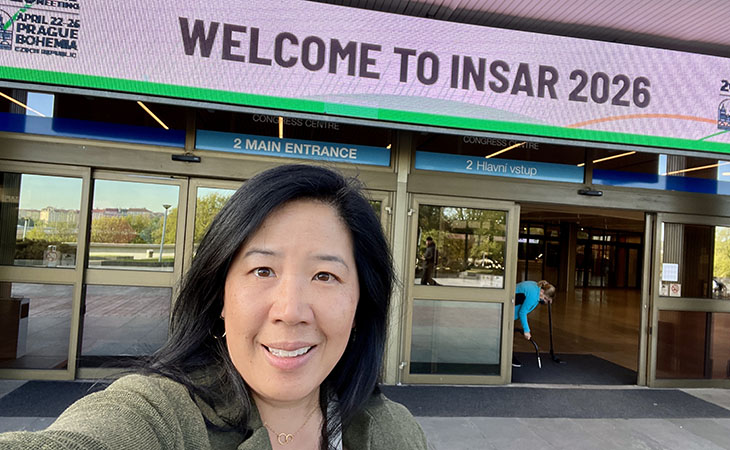
Christine Wu Nordahl was the scientific program chair at the INSAR 2026 conference in Prague.
Nordahl is a professor in the Department of Psychiatry and Behavioral Sciences and directs the Autism Phenome Project, a major long-term study that seeks to identify subtypes of autism. She was the scientific program chair for the conference. Along with a co-chair and past chair, she worked with a committee to review a record-breaking 2,563 abstract submissions and create the scientific panels, oral sessions and posters.
The conference is the most significant gathering of autism researchers in the world, bringing together experts from a wide variety of disciplines. In this Q&A, Nordahl reflects on the state of autism research today, the biggest issues facing researchers and autistic individuals and what’s next for the field.
At INSAR you served as scientific program chair. Why was that significant?
Christine Wu Nordahl at the INSAR 2026 Conference in Prague.
The INSAR meeting is really special because it brings together scientists and clinicians from many disciplines all focused on autism. MIND Institute researchers were also key to its creation. The conference was started in 2001 by Distinguished Professor David Amaral and supported in part by the MIND Institute. Distinguished Professor Emeritus Sally Rogers helped get National Institutes of Health funding to keep it going in the early years.
I first attended INSAR in 2005 as a brand-new postdoctoral researcher at the MIND Institute, so it was very meaningful to be invited to serve as scientific program chair for the 25th anniversary meeting. In addition to creating the scientific program, we also introduced a new educational symposium called Master Class in Fundamentals. The goal is to foster interdisciplinary research and build bridges between scientists at all career stages with different areas of expertise.
What are the biggest areas of focus in autism research right now?
Bringing services and support developed by researchers into public schools and other “real world” settings is a big area of focus that was discussed at INSAR. This is known as implementation science and it’s critical to improving quality of life for autistic individuals and their families.
Genetics is a big focus. For two decades, most genetic research in autism focused on de novo (meaning not inherited from their parents) rare variants that lead to certain forms of autism. Now, we are on the cusp of some exciting genetic and molecular interventions that could be very impactful for people with these single-gene causes of autism. A newer focus of genetics research is on common variations in many genes that together can lead to higher likelihood of autism. This is possible because of very large repositories of genetic data being examined across many conditions, including autism and ADHD.
Studying the brain is also an exciting and expanding area of research. Large-scale brain imaging studies that follow individuals across the life span are helping to identify subtypes of autisms, predict outcomes, and better understand how genes involved with autism affect brain development. Using stem cells and brain organoids, scientists are also investigating cellular mechanisms of how the brain develops.
How would you describe the current state of autism research?
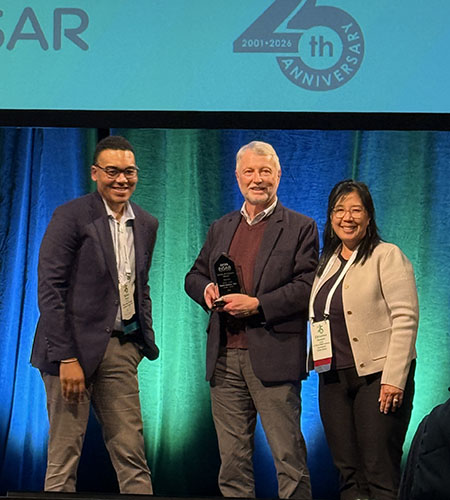
From left, INSAR President Brian Boyd, UC Davis Distinguished Professor David Amaral and Professor Christine Wu Nordahl on stage at the INSAR 2026 Conference in Prague.
There are so many positive things to say. Autism is being researched across diverse disciplines, from genetics and neuroscience to developmental psychology, education, interventions, lived experience and more. And it’s happening across the globe. We had submissions from 67 countries for the conference. So, I think the field of autism research is generally very strong and diverse.
What are the biggest challenges facing autism researchers?
Global conflict affects us all. Some researchers from Australia and Asia could not attend the conference in Prague because of flight cancellations and increased costs. Uncertainty about funding also remains a significant challenge for many of us. I worry this disproportionately affects early career researchers and trainees as graduate programs shrink.
Political influences on research priorities and misinformation are also concerns. When news stories focus on potential causes or interventions for autism that are based on weak or flawed evidence, it distracts from ongoing, scientifically strong research. It also causes confusion or even fear or shame in the autism community. We want to focus instead on evidence-based research and meeting the needs of autistic individuals and their families.
What are the biggest challenges facing autistic people and how have they changed?
Access to services and meaningful employment opportunities remain big challenges. One emerging area of research is aging and autism, and there is some evidence for higher risk for age-related conditions like dementia. So, as the number of adults with autism increases, so will the need for research that addresses the challenges they face as they age.
What do you want to focus on next with your research?
A big theme of the conference was to involve autistic voices in all stages of autism research. I’d like to engage more with the autism community to help guide my research. I think neuroscience lags a bit behind in involving the autistic community to help guide us with our research questions. We want to ensure that our research is addressing their priorities and needs.
The UC Davis MIND Institute in Sacramento, Calif. is a unique, interdisciplinary research, clinical, and education center committed to deepening scientific understanding of autism and other neurodevelopmental conditions. It is a highly collaborative center, bringing together families, researchers, clinicians, community leaders and volunteers with the common goal of developing more personalized, equitable, and scientifically proven systems of support and intervention. The institute has major research efforts in autism, fragile X syndrome, chromosome 22q11.2 deletion syndrome, attention-deficit/hyperactivity disorder (ADHD) and Down syndrome. More information about the institute and its Distinguished Lecturer Series, including previous presentations in this series, is available on the Web at https://health.ucdavis.edu/mind-institute/.