
Car Seat Safety
Infants and Toddlers: Rear-Facing Car Seats
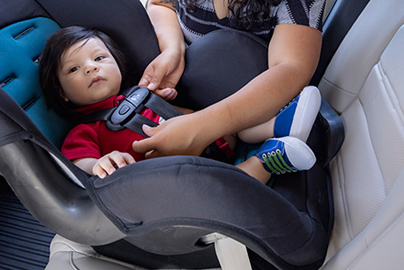
- Infant car seat – use rear-facing only.
- Convertible car seats – can be used in both rear-facing and forward-facing positions.
- 3-in-1 or All-in-one car seats – can be used in rear-facing, forward-facing, and booster positions.
Safety Tips
- All infants and toddlers should ride in a rear-facing child car seat until they are at least 2 years old or until they reach the maximum weight or height limit specified by the car seat manufacturer. There are several types of rear-facing child car seats: infant-only seats can only be used in a rear-facing position. Convertible and 3-in-1 seats typically have higher weight and height limits for rear-facing use, allowing you to keep your child rear-facing for longer.
- The harness straps in the child safety seat must be threaded through openings at or just below the top of the baby's shoulders.
- Harness straps should lie flat and fit snugly. Pinch the harness at the shoulder. There should be no slack.
- The harness chest clip should be secured at the armpit or nipple level.
- The child safety seat must be secured in the back seat, facing the rear of the vehicle. Never place a rear-facing child safety seat in the front seat where an airbag is present.
- Babies must ride sitting semi-reclined to keep the airway open. Car seats that can be used rear-facing have built-in angle indicators or adjustors to assist you.