
Award Opportunities for Scientists
Development Project Awards
The center has a competitive development project program and awards up to $100,000 each year. This program enables both new and established investigators to generate pilot data that can be used to advance Alzheimer’s research and enhance their ability to be competitive for extramural grants.
2026-27 UC Davis Alzheimer’s Disease Research Center Development Project Application Instructions
Research Education Component (REC) Scholar Program
Call for REC Scholar Applications 2026-2028
The UC Davis Alzheimer's Disease Research Center (ADRC) Research Education Component (REC) Program is funded by the National Institutes of Health, National Institute on Aging, ADRC P30 grant to support junior investigators and those new to the field of Alzheimer's disease (AD) research. The goal of the REC Scholar Program is to support AD research training for UC Davis clinicians and researchers who will advance the research on cognitive decline, dementia, and AD over the coming decades. The UC Davis ADRC supports a broad range of disciplines and approaches such as basic science, neuropathology, brain imaging, clinical and cognitive science, and social sciences. This program provides $20,000/annually for the 2-year program. Funds may be used for AD-related research expenses, salary support to engage in the REC program, or travel to present at an AD-related conference. Second-year funding is contingent on progress in the first year.
Program Opportunities
- Funding of $20,000 each year for 2 years
- Learn and participate in ADRC structured and experiential research activities
- Individual UCD ADRC faculty mentoring
- Networking with local and national ADRC leaders
- Obtain mentoring on grant writing, career development, funding sources, etc.
Program Requirements
- UC Davis graduate student, postdoctoral fellow, junior faculty, or researchers new to the ADRD field
- Provide an AD-related research project proposal, budget, and budget justification
- Participate in two years of focused research training, including attending and presenting at biweekly ADRC research meetings and other REC curricula
- Complete regular progress reports
- Be a U.S. citizen or permanent resident
How to Apply
- Send a cover letter, CV, and a one-page project proposal with budget and justification to Anna Schmidt at agschmidt@health.ucdavis.edu.
- Direct questions about the program, please email Oanh Meyer, Ph.D., olmeyer@health.ucdavis.edu or Alyssa Weakley, Ph.D., aweakley@health.ucdavis.edu.
Important Dates
- Application Deadline: May 5, 2026
- Funding Decisions: May 30, 2026
- Funding Starts: July 1, 2026
Note: Funding is contingent on successful renewal of the P30 grant.
Meet Our Current REC Scholars
-
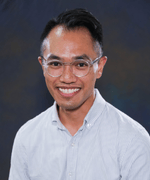
Alex Posis, Ph.D., M.P.H.
Learn MoreAlex Posis, Ph.D., M.P.H., is a Postdoctoral Scholar in the Department of Public Health Sciences at the University of California, Davis. Posis’s research interests include identifying social determinants and modifiable factors of brain health and cognitive aging. Prior to joining Rachel Whitmer's, Ph.D., lab, he earned his B.S. in Neuroscience from the University of California, Santa Cruz, M.P.H. in Epidemiology from San Diego State University, and Ph.D. in Public Health (Epidemiology) from the Joint Doctoral Program in Public Health at San Diego State University and University of California, San Diego.
-
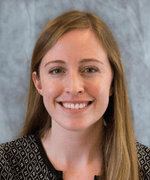
Michelle Cohn, Ph.D.
Learn MoreMichelle Cohn, Ph.D. is a Postdoctoral Scholar in the UC Davis Phonetics Lab, associated with the Department of Linguistics. She received her Ph.D. in Linguistics at UC Davis in 2018. Her postdoctoral training includes a 2.5 year Social, Behavioral, and Economics (SBE) Postdoctoral Fellowship through the National Science Foundation. From 2022 to 2024, Cohn was also a Visiting Researcher with the Google Responsible AI and Human-Centered Technologies group. Cohn’s research program aims to uncover the cognitive mechanisms that underlie how people produce, perceive, and learn speech patterns with voice technology. In 2024, she started as one of two REC Scholars at the UC Davis Alzheimer's Disease Research Center, working with Alyssa Weakley, Ph.D.