Contrast-enhanced mammography offers clearer view of breast cancer
By Stephanie Winn
Advanced breast cancer imaging helps doctors detect hidden cancers
(SACRAMENTO)
UC Davis Healthis expanding access to a next-generation breast imaging technique that gives a more detailed picture of potential cancer and with faster results.
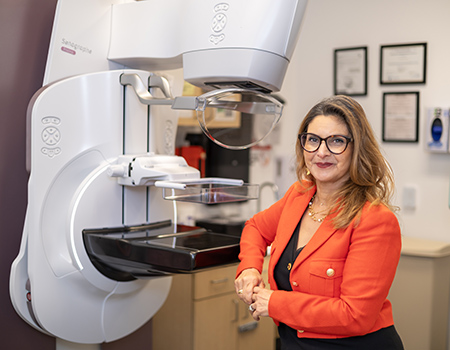
Shadi Aminololama-Shakeri, chief of the Division of Breast Radiology, leans on the new contrast-enhanced mammography unit at the 48X Complex at UC Davis Health.
UC Davis Health was the first health system to offer the new technology in the Sacramento area when the advanced imaging was deployed at theUC Davis Health Placer Center for Healthin Rocklin in 2025.
CEM combines traditionalbreast imagingwith the use of intravenous contrast material to highlight areas of increased blood flow within breast tissue. These areas can be associated with malignancy, as cancerous tumors often develop new blood vessels to support their growth.
How contrast‑enhanced mammography works
During the exam, an iodine‑based contrast agent is administered intravenously. After injection, the mammography system captures images of the breast that are digitally processed, suppressing background tissue. This highlights areas where contrast has accumulated.
The resulting contrast‑enhanced images reveal functional information, such as increased vascularity, alongside detailed structural anatomy. This dual‑energy technique helps radiologists identify suspicious lesions that may not be clearly visible on standard mammography alone.
Specific system installed
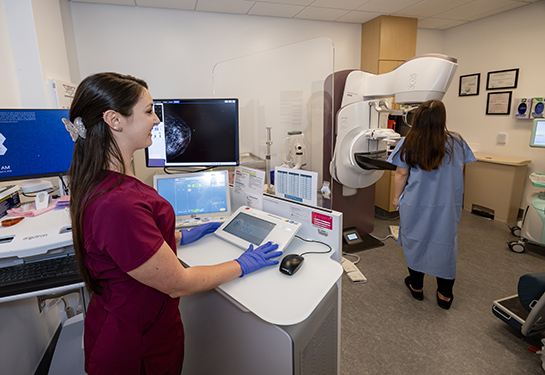
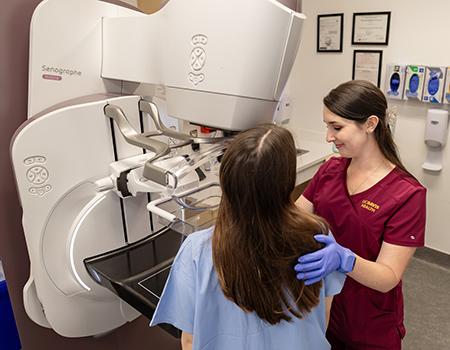
UC Davis Health has installed theSenographe Pristinamammography system at the three locations. Developed byGE HealthCare, it has the capability of producing both 3D images and contrast‑enhanced 2D images of the breast.
The Senographe Pristinamammography system.
With 2D contrast‑enhanced imaging, doctors review standard mammogram images while also seeing where the contrast dye collects. This can reveal a specific area of concern.
With 3D imaging, also called tomosynthesis, the breast is scanned in many very thin layers. Similar to flipping through pages of a book, rather than a single picture, it makes it easier to see through overlapping tissue and spot areas that might otherwise be hidden.
Seeing how a finding responds to contrast dye, along with its appearance on a mammogram, gives us a clearer picture of what’s going on,” saidShadi Aminololama-Shakeri, chief of theDivision of Breast Radiology. “This helps us better identify areas that may need follow‑up and gives us greater confidence when assessing subtle changes, particularly in dense breast tissue.”
Who benefits most from contrast‑enhanced mammography
Contrast‑enhanced mammography can be particularly valuable for women who require additional diagnostic evaluation beyond routine screening.
“Contrast‑enhanced mammography is especially beneficial for women with dense breast tissue or individuals who cannot undergo breast MRI due to health reasons or because they have limited access,” Aminololama-Shakeri said.
Contrast‑enhanced mammography is also helpful for:
Evaluating abnormal screening results
Assessing the extent of known breast cancer
Monitoring response to therapy.
Advancing breast imaging
By expanding contrast‑enhanced mammography across its regional clinics, UC Davis Health is improving convenience for patients while increasing access to advanced imaging that supports more personalized and precise breast cancer detection, and evaluation. This technology helps clinicians make well‑informed decisions and enhances the overall quality of care.
Because the new mammography option also delivers faster results, it helps women stay on track with recommended breast imaging. Patients should first discuss this exam with their health care provider who can place an order, if needed. To learn more or to schedule an appointment for breast imaging services, UC Davis Health patients can call 916‑734‑0655 (option 2).
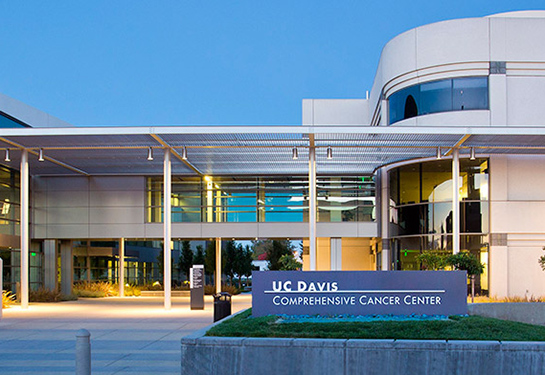
UC Davis Comprehensive Cancer Center
UC Davis Comprehensive Cancer Center is the only National Cancer Institute-designated center serving the Central Valley and inland Northern California, a region of more than 6 million people. Its specialists provide compassionate, comprehensive care for more than 100,000 adults and children every year and access to more than 200 active clinical trials at any given time. Its innovative research program engages more than 240 scientists at UC Davis who work collaboratively to advance discovery of new tools to diagnose and treat cancer. Patients have access to leading-edge care, including immunotherapy and other targeted treatments. Its Office of Community Outreach and Engagement addresses disparities in cancer outcomes across diverse populations, and the cancer center provides comprehensive education and workforce development programs for the next generation of clinicians and scientists. For more information, visit cancer.ucdavis.edu.