Virtual Summer Institute will focus on tech use and neurodevelopmental disabilities
By Marianne Russ Sharp
Event highlights research, risks and strategies for support
(SACRAMENTO)
The upcoming 2026 Summer Institute on Neurodevelopmental Disabilities will focus on a critical area of need: navigating the use of technology. The half-day virtual event on July 24, from 8:30 a.m. to 12 p.m., will explore new research on how technology can support people with autism and other neurodevelopmental conditions. It will also feature an expert panel exploring key issues like inclusion, online safety and dating.
This year’s timely theme was chosen by a committee of local community members and MIND Institute employees. The group includes leaders from school districts, regional centers and community organizations, most of whom have lived experience with neurodevelopmental conditions.
“It is such an important topic because the entire world is trying to navigate new technology that has become a part of everyday life,” explained Kelly Heung, co-director of Summer Institute. “People with disabilities and those who support them need effective tools and up-to-date information to help use this valuable yet sometimes harmful resource.”
Summer Institute highlights:
New research on how technology improves support for people with autism, fragile X syndrome, ADHD and other neurodevelopmental disabilities
A keynote presentation “People First, then Tech,” by Lauren Tucker, associate professor of special education at Southern Connecticut State University
An expert panel with autistic self-advocates, a clinical psychologist and a police detective discussing inclusion, online safety, dating and independence
Breakout conversations
The keynote topic is especially relevant, said Summer Institute co-director Amber Fitzgerald, director of education initiatives for the Center for Excellence in Developmental Disabilities.
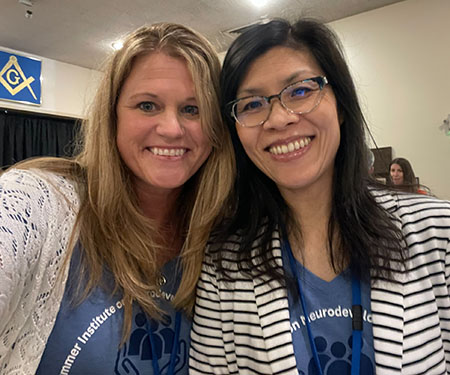
From left, Summer Institute Co-Directors Amber Fitzgerald and Kelly Heung.
“The idea of ‘people first, then tech’ might sound simple, but it’s actually a game changer for how we think about technology support,” she explained. “Too often we jump straight to the tool without asking whether it’s the right fit for the person in front of us.”
Fitzgerald said the framework discussed during the event will give families, caregivers and professionals a practical way to slow down and make technology decisions that are centered on the individual.
“Technology is a valuable gift that requires care to be used effectively, and I know our participants will take away valuable information and resources that they can use themselves and share with others,” Heung said.
Summer Institute is ideal for professionals, researchers, individuals with disabilities, family members advocates, students or community members. Registration fees start at $25. Healthcare professionals who attend can receive three continuing education credits. The deadline to sign up is July 17.
The UC Davis MIND Institute in Sacramento, Calif. is a unique, interdisciplinary research, clinical, and education center committed to deepening scientific understanding of autism and other neurodevelopmental conditions. It is a highly collaborative center, bringing together families, researchers, clinicians, community leaders and volunteers with the common goal of developing more personalized, equitable, and scientifically proven systems of support and intervention. The institute has major research efforts in autism, fragile X syndrome, chromosome 22q11.2 deletion syndrome, attention-deficit/hyperactivity disorder (ADHD) and Down syndrome. More information about the institute and its Distinguished Lecturer Series, including previous presentations in this series, is available on the Web at https://health.ucdavis.edu/mind-institute/.