

Social Skills Program

Massie Family Clinic
Clinics and Programs
Social Skills Program
Thank you for your interest in the Social Skills Program at the UC Davis MIND Institute. To help streamline scheduling and ensure families are connected to the most appropriate services, a referral through the MIND Institute Massie Family Clinic is required before program applications can be provided.
If services are billed through insurance, the referral must be submitted by your child’s primary care provider or a referring clinician. We are unable to accept self-referrals in these cases.
How to Submit a Referral
Your child’s primary care provider or referring clinician may submit a referral using one of the following options:
- Submit a referral online through the UC Davis Health Physician Referral Center
- Call 800-482-3284 for assistance
Once the referral has been received and processed, our team will review it and contact your family with the next steps, including application information if appropriate.
Learn more about what to expect after a referral is submitted.
Program Overview
The Social Skills Program is a structured, evidence-informed group intervention designed to support children, teens, and their families in developing social communication and interpersonal skills.
Program Components
1. Child / Adolescent Group
- Participants are grouped by age (8-10, 11-13, and 14-17)
- Groups typically include 8-15 children
- Led by a licensed clinical psychologist, with support from trained co-leaders (staff, faculty, trainees, and MIND Institute volunteers)
- Groups meet once weekly for 10 weeks
- Each session lasts 1.5 hours
- Sessions are held Tuesday afternoons (4:15–5:45 p.m.)
- Offered during Winter and Spring sessions
2. Parent / Caregiver Group (Required)
- Held concurrently with the child/adolescent group
- Led by a licensed clinical psychologist
- Attendance is mandatory
- Focus on:
- Weekly curriculum overview
- Diagnostic profiles and co-occurring conditions
- Treatment strategies
- School collaboration
- Guest speaker presentations
- Provides education, support, and opportunities to connect with other families
Curriculum Focus
- Perspective-taking
- Social circles and friendship
- Making and keeping plans
- Independence and leadership (for teens)
Eligibility Criteria
Participants must meet all the following:
- Age Requirement: Children and teens aged between 8 and 17 years
- Behavioral Expectations: Participants should not have exhibited any aggressive outbursts in a group or classroom-type environment within the past year. We understand that children may have challenges at home, but we prioritize the safety and well-being of all participants.
- Attention Expectations: Participants are expected to be able to remain seated for 15-20-minute portions of the lesson. If your child requires a one on one while attending school for most of the day to support challenges with attention and behavioral concerns, our program does not offer this level of support and would not be a good fit at this time.
- Verbal Abilities: Participants are expected to have average or above verbal abilities for their age. Those with lower receptive and expressive verbal abilities do not benefit from our verbally oriented program, challenges with pragmatic language are permitted. Your child must be able to communicate fluently using full-length sentences that are built upon one another. They must demonstrate the ability to engage in reciprocal conversation with others, even if it is only briefly sustained, often prompted, and/or primarily about their own topic of interest.
- Learning Expectations: While individuals within the group may have various learning challenges (e.g., writing or reading), their overall cognitive abilities should fall broadly within the average range compared to same-aged peers.
- Diagnosis: Children must have a diagnosis of autism or clinically significant social communication difficulties. Some children and teens may not have undergone a formal assessment or may only have an education-based classification.
Social Skills Team
-
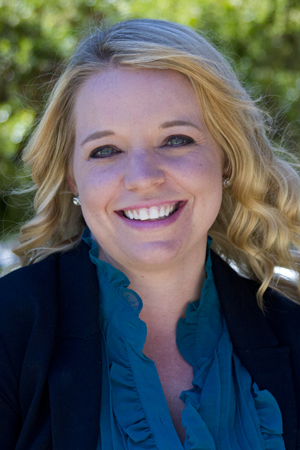
Danielle Haener, Psy.D.
Psychologist
Danielle Haener, Psy.D., is a licensed psychologist at UC Davis MIND Institute with specialized training in psychological assessment and treatment of children with autism spectrum disorders. She has also had extensive training in work with children and families with trauma, mood and behavioral disorders
-
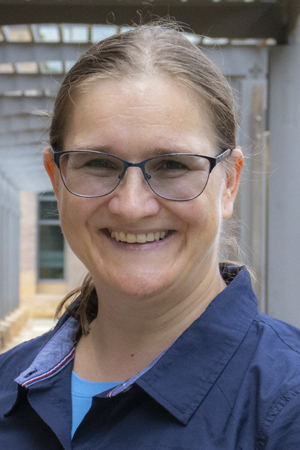
Andrea Schneider, Ph.D.
Assistant Research Scientist, Licensed Psychologist, UC Davis MIND Institute, Department of Pediatrics, Associate Professor.
Andrea Schneider obtained her Ph.D. in Psychology at the University of Potsdam, Germany, and worked as a researcher and lecturer in Clinical Psychology in Germany. In 2011, she completed a postdoctoral fellowship at the UC Davis MIND Institute and the Fragile X Research Treatment Program focusing on neurodevelopmental and genetic conditions. Since 2011, she is a faculty member at the Department of Pediatrics and holds an Assistant Research Scientist position at the UC Davis MIND Institute.
A Social Adjustment Enhancement Intervention for High Functioning Autism, Asperger Syndrome, and Pervasive Developmental Disorder NOS.
Solomon M, Goodlin-Jones BL, Anders TF.
J Autism Dev Disord. 2004 Dec;34(6):649-68.
Abstract
This paper reports the findings of a 20-week social adjustment enhancement curriculum for boys aged 8-12. The curriculum was designed to address three areas hypothesized to be deficient in persons with HFA, AS, and PDD NOS: emotion recognition and understanding; theory of mind; and executive functions/real life type problem solving. Parents attended a semi-structured concurrent psychoeducational training meeting during children's sessions. Statistically significant improvements in facial expression recognition, and problem solving were reported for intervention group children compared to waiting list control group children. For the intervention group (the only group for whom data were available), older and less cognitively able boy's scores on a depression inventory decreased significantly more than younger children's. Mother's depression scores tended to decrease and there were significant reductions in child problem behaviors reported. Results are discussed in the context of individual differences in participant cognitive levels and profiles, symptom severity, and affect-related variables.
The Effectiveness of Parent-Child Interaction Therapy for Families of Children on the Autism Spectrum.
Solomon M, Ono M, Timmer S, Goodlin-Jones B.
J Autism Dev Disord. 2008 Oct;38(9):1767-76. Epub 2008 Apr 10.
Abstract
We report the results of a pilot trial of an evidence-based treatment-Parent-Child Interaction Therapy (PCIT; Eyberg et al. Psychopharmacology Bulletin, 31(1), 83-91, 1995) for boys aged 5-12 with high functioning autism spectrum disorders and clinically significant behavioral problems. The study also included an investigation of the role of shared positive affect during the course of therapy on child and parent outcomes. The intervention group showed reductions in parent perceptions of child problem behaviors and child atypicality, as well as an increase in child adaptability. Shared positive affect in parent child dyads and parent positive affect increased between the initial and final phases of the therapy. Parent positive affect after the first phase was related to perceptions of improvement in problem behaviors and adaptive functioning.
Join us in our commitment to the awareness, understanding, prevention, and treatment of the challenges associated with neurodevelopmental disabilities.
Contact Us

For more information about the program, please contact:
Nicki Rodriguez
Program Coordinator
E-mail: mindsocialskills@health.ucdavis.edu
Address
UC Davis MIND Institute
2825 50th Street
Sacramento, CA 95817