

Autism Phenome Project
Welcome to the Autism Phenome Project
The goal of the Autism Phenome Project (APP) is to identify and describe different types of autism.
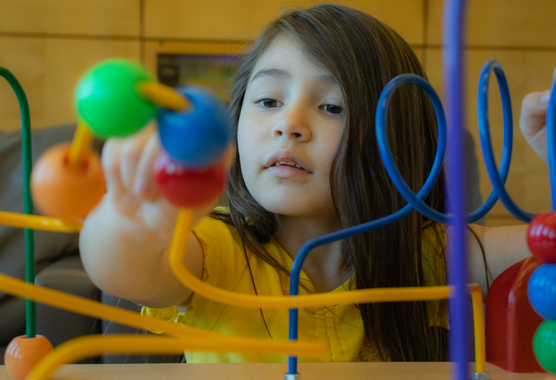
Autism Phenome Project
Purpose
Autism can look very different in different people. We know that not every therapy or treatment is helpful for everyone, so we aim to identify groups of children with common traits. These might be things like shared patterns of brain development or similar behaviors.
Eventually, we hope this information will help us in finding the best supports or therapies to meet an individual's unique needs.
History
The APP started in 2006 with the collaboration of numerous MIND Institute faculty and staff, led by David G. Amaral, Ph.D. Families originally enrolled when their child was 2-3 years old, and we have followed up with them at multiple time points since, from early childhood up through adolescence. We look at many different factors to help us get a complete picture of each child. This includes behavioral and neuropsychological assessment, medical history, blood draw, and an MRI scan of the brain. The APP includes both autistic and non-autistic children to help us understand the differences in development.
More than 300 families have participated in the APP. It has become the largest and most comprehensive assessment of children with autism in the world. We are very appreciative to all of the families that have participated so far and have helped us to improve our understanding of autism.
Current and related studies
The work of the APP continues today in many forms. We are continuing to follow-up with the original participating families. Findings from the APP have also helped us develop new studies and programs aimed at understanding subtypes of autism.
Phases of APP
Early Childhood
In the early childhood phase of the study, we enrolled children at ages 2-3, then followed up 1 year later (ages 3-4), and 2 years later (ages 4-5). This phase of the study was aimed at understanding early brain development, behavioral presentations of autism, and co-occurring medical conditions in young children.
We are not currently enrolling new participants in this portion of the APP.
We are enrolling autistic and non-autistic girls who are 2-4 years old in our related study, GAIN.
Middle Childhood
Autism can impact individuals differently throughout life. To understand autism over time, we initiated the Middle Childhood phase of the APP. In this phase, we focus on autistic traits, co-occurring medical and mental health conditions, and brain development. We also are looking at how behavioral or biological characteristics in early childhood may predict the strengths and challenges a child will face in middle childhood.
We are currently recruiting the following for the Middle Childhood phase of APP:
Families who participated in previous phases of the APP and whose child is now 9-12 years old
Adolescence
We are continuing to follow participants longitudinally to look at brain development over time, effects of puberty on the brain and behavior, and co-occurring mental health conditions like anxiety and depression. We are currently inviting families who participated in previous phases of the APP to return for this phase of the study when their child is 15-18 years old.
We are not currently enrolling participants in this phase who have not completed earlier phases of the APP.
If you are interested in participating in any of the studies listed above, please contact our team at
TeamAPP@health.ucdavis.edu.
Research Team
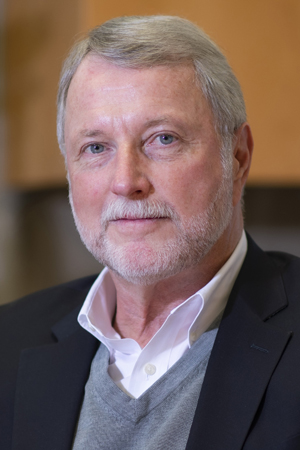
David Amaral received his undergraduate education at Northwestern University and graduated with a degree in Psychology. He then moved to the University of Rochester where he received a joint Ph.D. in Neuroscience and Psychology. He conducted postdoctoral research at the Department of Anatomy and Neurobiology at Washington University. He then moved to the Salk Institute for Biological Studies where he remained for 13 years. During this period, he was also an adjunct professor in the Department of Psychiatry at UC San Diego. He joined the University of California, Davis in 1995 as a Professor in the Department of Psychiatry and Behavioral Sciences and the Center for Neuroscience. He is also a core scientist at the California National Primate Research Center. He was the Beneto Foundation Chair and Research Director of the MIND Institute from 1998 to 2018. He also serves as Director of Autism BrainNet. He started the Autism Phenome Project in 2006 with the collaboration of numerous MIND Institute faculty and staff, and the project has become the largest, single-site, longitudinal analysis of young children with autism. In 2015, he became Editor-in-Chief of Autism Research, the journal of INSAR. In 2019, Amaral was elected to the prestigious US National Academy of Medicine.
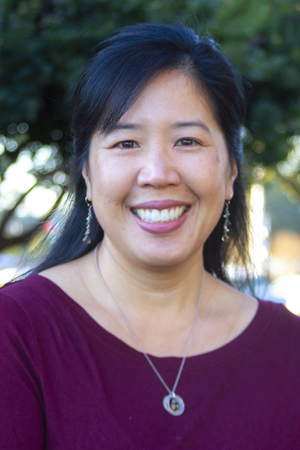
Christine Nordahl received her undergraduate degree from Cornell University and graduate degree in neuroscience from UC Davis. She began her career at the MIND Institute as a postdoctoral fellow and has been working on the Autism Phenome Project (APP) since the beginning of the project, spearheading efforts to develop pediatric neuroimaging protocols to acquire MRI scans in infants and toddlers during natural sleep, without the use of sedation or anesthesia. She joined the MIND Institute faculty in 2011 and is an assistant professor in the Department of Psychiatry and Behavioral Sciences. She initiated the Girls with Autism - Imaging of Neurodevelopment (GAIN) Study in 2014 to focus on autism in females. She is also the Principal Investigator of the BRAIN Study, a part of the MIND Institute Autism Center of Excellence. Together with her team, she founded NeuroTeens in 2021, a social support group for neurodivergent girls and nonbinary teens.
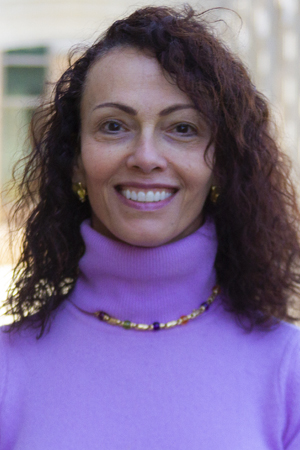
Marjorie Solomon is a Professor in the Department of Psychiatry and Behavioral Sciences, the MIND Institute, and the Imaging Research Center. She also is a licensed clinician with a broad background in clinical assessment and psychosocial intervention for higher functioning individuals with autism. In 2007, she received a K08 Career Development Award to use cognitive neuroscience methods including fMRI to study higher cognition. From 2012-2012, Solomon served as an appointee of HHS Secretary Kathleen Sebelius to the InterAgency Autism Coordinating Committee (IACC). Her ultimate goal is to apply what she learns through her neuroscience investigations to the development of interventions – the area where she began her career at the MIND, and one she continues to develop as the Director of the MIND social skills training group program. She is fortunate to have received philanthropic funding for this program from Joyce and Jim Teel for the Thomas P. Raley Foundation. An Endowed Chair from the Oates Family Foundation and funding from the UC Davis Behavioral Health Center of Excellence has permitted her to further develop intervention programs for autistic adults.
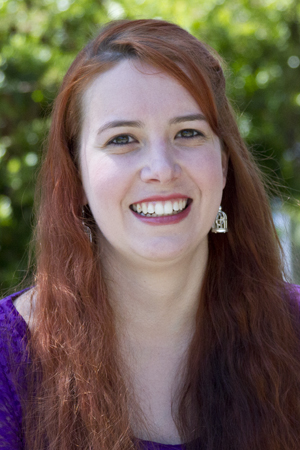
Brianna Heath is a program manager at the UC Davis MIND Institute. She earned her Bachelor of Science degree in Biology from Southern Oregon University and her PhD in Human Genetics from the University of Pittsburgh, working with cell and animal models of neurodegenerative disease, before moving into autism research. Her role serves as a bridge between project leaders, collaborators, the research team, and participating families. She oversees the operations of several multi-disciplinary autism research studies including the Autism Phenome Project (APP) and the GAIN Study. Her role serves as a bridge between project leaders, collaborators, the research team, and participating families.
She also serves on the MIND Institute Diversity, Equity, and Inclusion Committee, aids with sharing research findings through the IDDRC (Intellectual and Developmental Disabilities Research Center) Scientific Dissemination efforts, and is an alum of the Leadership Education in Neurodevelopmental and Related Disabilities (LEND) program. She has ADHD and is passionate about promoting self-advocacy for neurodivergent individuals. Across all these domains, her work is aimed at bridging the gap between those with lived experience and the policy makers, clinicians, and researchers whose work directly affects the lives of those individuals.
Our BCBAs assist with our MRI process to help children feel comfortable with the MRI environment and have a successful scan. Not all children will need this assistance, but families who choose to have a BCBA assist with the MRI will work with one BCBA throughout the process.
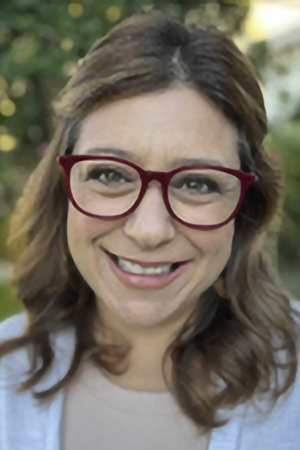
Christina Forgét
Christina Forgét is a Board Certified Behavior Analyst who serves individuals diagnosed with autism and related development disabilities in school and clinic-based settings. She graduated with a Masters of Science Degree in Behavior Analysis from the California State University, Stanislaus in 2009. Christina has been a part of the Autism Phenome Project since 2016. As a Board-Certified Behavior Analyst, Christina uses evidence-based strategies to support participants through the MRI process. In addition to her work on our studies, she trains and supports educators in a local school district to use evidence-based practices in the classroom, with intentions to improve academic, social and behavioral outcomes for students ranging in age from 5 to 22 years. She is a participating member with the California Autism Professional Training and Information Network (CAPTAIN) from 2016 to present.
Our research team analyzes the data we collect through the study. This includes people at different levels of their career and education, including graduate students, fellowship trainees, and professional researchers. Most of these individuals work "behind the scenes." However, some help with our MRI process, and families may meet them during an MRI visit.
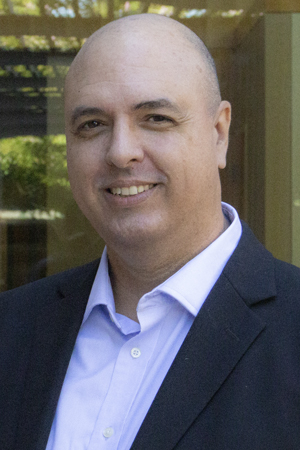
Joshua Lee, Ph.D.
Josh Lee is an Assistant Professional Researcher at the MIND Institute. As a developmental neuroscientist, his research characterizes processes of brain development in individuals with neurodevelopmental disabilities. He received his Ph.D. in Psychology at the University of California, Davis in 2016 where he conducted research on typical and atypical development of the hippocampus and episodic memory. As a post-doctoral fellow at the UC Davis MIND Institute Autism Research Training Program, he conducted research examining the development of autistic neurophenotypes in males and females. He has expertise in longitudinal statistical analysis, high-resolution structural MRI imaging, and resting-state functional MRI. He is currently pursuing research to elucidate elevated coincidences between autism and gender diverse identity, an under-served intersection. In addition to his analytical role on the study, He also operates MRI scan sessions for the APP and GAIN studies.
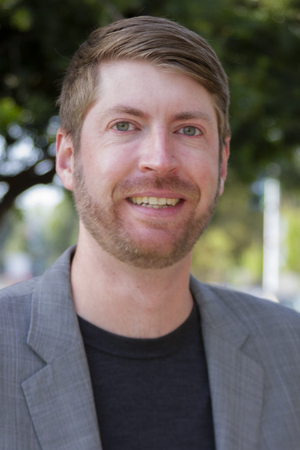
Derek Sayre Andrews, Ph.D.
Derek Andrews joined the MIND Institute in 2017 as a postdoctoral scholar after receiving his Ph.D. in Neuroimaging from King’s College London, UK. His research focuses on the analysis of magnetic resonance images of the brain to increase our understanding of the biological basis of autism. As a member of the MIND Institute, he has published studies identifying brain measures associated with different autism symptom trajectories over childhood as well as co-occurring anxiety and sleep problems in autistic children.
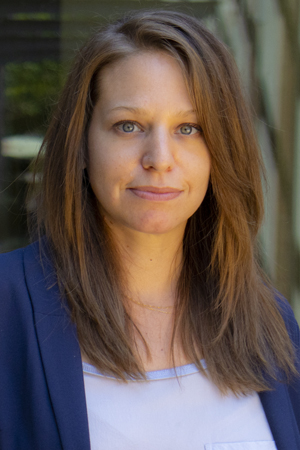
Einat Waizbard-Bartov, M.A.
Einat Waizbard-Bartov is a Ph.D. student in the Department of Psychology. Einat earned her BA in behavioral sciences at Ben-Gurion University (Israel) and her M.A. in clinical psychology (child focused) at the Academic College of Tel-Aviv-Yafo (Israel). Before coming to the US, Einat worked at the Autism Research Lab in the department of Psychology at Bar-llan University (Israel). Einat is a licensed clinical psychologist in Israel and a certified Cognitive Behavioral Therapist. As part of her clinical work, she conducted clinical assessments and provided individualized interventions, parent trainings and facilitated social skills groups for preschoolers, young children, and adolescences, both neurotypical and diagnosed with autism. Her current research interests include the core symptoms of autism, change in developmental trajectories over time and the female autism phenotype.
These members of our team help with specific parts of our study. Most of these individuals work "behind the scenes," but families may sometimes see them during visits.
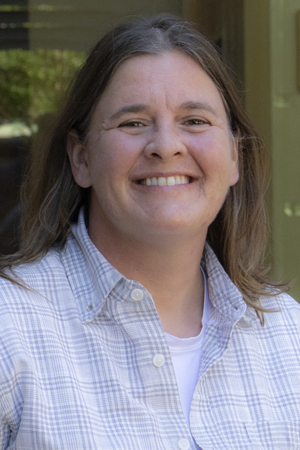
Melissa Regester, B.S.
Melissa Regester joined the research team in 2017 as a Lab Assistant. She is responsible for processing and managing inventory of biospecimens from APP participants. She maintains a specialized database system to track available quantity and quality of processed materials like DNA and blood cells and helps coordinate sharing materials with research collaborators. She has also undergone training at the MIND Institute to assist the pediatric phlebotomist during blood draws to ensure participant and staff safety. In addition to her role on the research team, Melissa maintains the MIND Institute Biorepository and manages operations for the MIND Institute Bioscience Building.
Resources for Participants
MRI sounds
MRI infographic
Join our research participant registry (RPR)
Contact Us
APP Study Coordinators and General Inquiries: TeamAPP@health.ucdavis.edu.
Program Manager
Brianna Heath
Phone: 916-703-0452
Email: bheath@health.ucdavis.edu