School of Medicine students spotlight global health inequities affecting displaced communities
By Liam Connolly
The inaugural Global Health and Health Equity Week at UC Davis Health brought attention to health needs worldwide
(SACRAMENTO)
Displaced groups — including refugees, asylum seekers and internally displaced people (IDPs) — face major health challenges. These include infectious diseases, worsening chronic conditions, maternal and child health risks, trauma‑related mental health concerns, injuries from conflict or migration and limited access to basic care.
These problems are made worse by overcrowded shelters, unsafe water and sanitation, disrupted medical systems and long‑term underfunding, especially for IDPs.
To raise awareness about these concerns, students from the UC Davis School of Medicine hosted the 10th annual Coalition for Health Equity (CHeQ) Conference. This year’s event focused on urgent health crises affecting migrant and displaced communities in places such as Sudan, Gaza and countries across the Americas.
Students, faculty and community members learned about the health impacts of displacement and explored ways to take action through policy change, advocacy and care that understands trauma.
The event was co-led by second-year students Yasmine El‑Hage, Era Goel and Maya Sahtout. The conference was sponsored by the School of Medicine and the Betty Irene Moore School of Nursing at UC Davis.
“We’re all children of immigrants, so issues of migration and displacement are very personal to us and to many of our classmates,” shared El‑Hage. “We wanted to highlight what we’re seeing around the world and how deeply connected these crises are. These situations create major health inequities — not only abroad but also here in our own communities.”
A space to share experiences and understand realities
Throughout the conference, students talked openly about the pressures facing both local and global communities. Many of these conversations connected to students’ own family histories and experiences with immigration, which made the discussions especially meaningful.
Speakers included physicians Anna Yap, Anik Patel and Mogahed Ilkeet, who joined the conference virtually from Sudan. Their perspectives helped students better understand the realities of providing care in conflict zones.
“We wanted to hear directly from people working with displaced populations on the ground,” Sahtout explained. “Authenticity matters in crisis settings. We wanted our students and health community to learn from experts who see these challenges every day and to have real conversations with them. We also wanted to take the next step — to think about how we can amplify their voices, build coalitions beyond the clinic and gain skills that truly support displaced communities.”
Each of the student leaders work in UC Davis student‑run clinics in Sacramento, where they care for many immigrant patients and serve diverse communities. Students often hear real concerns in the clinics — including worries about how immigration enforcement could affect patient care.
“It’s easy to think that crises in other countries won’t affect us,” Goel shared. “But the pandemic and recent migration emergencies showed how connected we all are. If we don’t care for one another globally, the impact reaches everyone. That understanding is what drives my passion for global health and my goal to practice medicine across borders.”
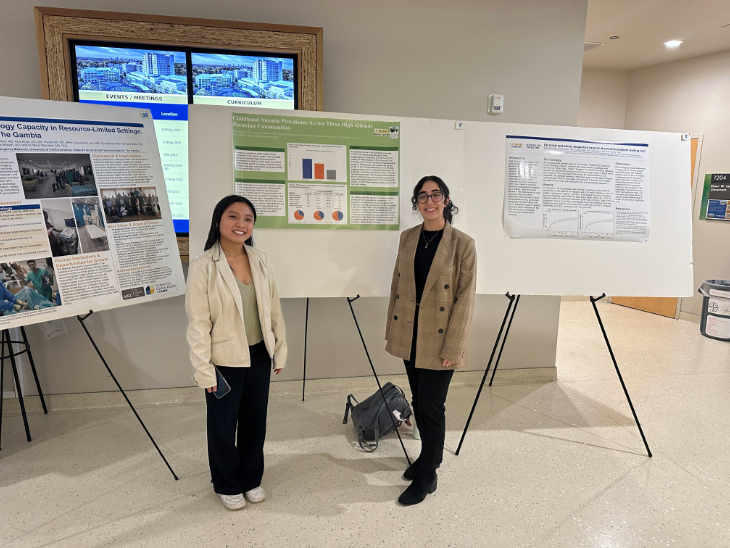
Attendees saw more than 30 research posters, oral abstracts, presentations and visual exhibits that highlighted global health innovation and efforts to advance health equity.
Global Health and Health Equity Week
The CHeQ Conference was part of the first Global Health and Health Equity Week at UC Davis Health. The week featured a full schedule of events across the Sacramento campus. It was hosted by the UC Davis Center for Global Health, which was created to support collaboration, training and global partnerships across all specialties.
During the week, faculty members shared research findings, clinical cases and personal stories from recent global health trips, offering attendees a closer look at work happening around the world.
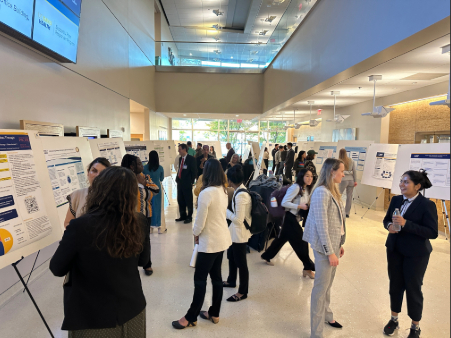
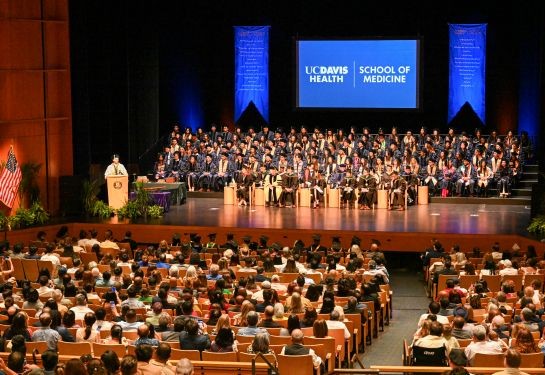
A diverse group of more than 200 students, residents, fellows and faculty attended from across the UC system. Attendees saw more than 30 research posters, oral abstracts, presentations and visual exhibits that highlighted global health innovation and efforts to advance better health care for all.
The week opened with a keynote address from Diana Farmer, chair of the Department of Surgery, who reflected on her career in global health and shared her vision for the field’s future. Susan Murin, dean of the UC Davis School of Medicine, delivered welcoming remarks during the oral abstracts and research symposium.
A diverse group of more than 200 students, residents, fellows and faculty attended Global Health and Health Equity Week from across the UC system.
Ousman Sanyang, a general surgery resident at Edward Francis Small Teaching Hospital in The Gambia, joined remotely to share how the UC Davis point-of-care ultrasound (POCUS) program helped diagnose a perforated stomach ulcer. The case was a powerful example of the program’s strong collaboration and real clinical impact.
“Hearing these stories shows how impactful global work can be,” said Norkamari Shakira Bandolin, director of global health at UC Davis. “Experiences like these help physicians, staff and students build practical skills, understand how social conditions affect health and develop cultural competence.”
Committed to improving the wellbeing of all
The UC Davis Center for Global Health strives to improve health and equity for patients locally and around the world. Through ongoing work with partners in the United States and abroad, the center offers students, residents, fellows and faculty hands‑on opportunities to learn how to practice thoughtful, culturally responsive health care. It also connects UC Davis Health providers with clinical, educational and research programs.
UC Davis Health follows an interdisciplinary model known as One Health to guide its global health efforts. One Health recognizes that people, animals and the environment are closely connected. By understanding these links, the concept can better address the root causes of poor health and improve well‑being for all communities.
“To improve patient health, we must provide high‑quality, individualized care while also working to reduce health inequities,” Bandolin said. “Through global health research, education, training and strong partnerships, we aim to expand access to care both locally and internationally. This commitment strengthens the care we provide here at home in the Sacramento region.”
UC Davis Health will host the next Global Health and Equity Week from Nov. 30 to Dec. 4. More details about how to get involved, along with the full schedule of events, will be shared this spring and summer.