

 What is a bloodstream infection?
A bloodstream infection happens when bacteria or germs travel through your child’s central line into the blood. Your child can get very sick if germs get into the bloodstream.
Preventing infection of your child’s central line (Broviac®, Port-a-Cath®, PICC)
When to be concerned your child has an infected central line
- Call your doctor for a temperature greater than 100.4°F or as instructed by your doctor.
- Do not give Tylenol® or Motrin® until instructed to do so by your doctor.
- If the skin around the central line has redness, swelling, drainage, odor or is painful, call your child’s doctor or nurse right away.
To prevent infection
- Please show “This is My Lifeline” card to health care providers.
- Keep the dressing and all parts of the line’s tubing dry and clean.
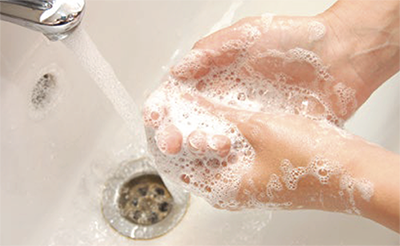
- Wash hands with soap and water, or use alcohol hand sanitizer before touching the line.
- Make sure family and friends wash their hands before and after visiting.
- Do not allow anyone to care for the central line unless trained to do so.
- Wear a mask when the central line dressing or caps are changed.
- Always use a clean surface for supplies.
- Replace the dressing if wet, dirty, has any type of drainage or if it starts to peel off.
- Before putting on a new dressing, the skin and any part of the line under the dressing should be vigorously scrubbed with Chlorhexidine®. Remember to allow to completely dry.
- Never blow on or wave hand to dry the skin after cleaning.
- Use a medicated disc (BIOPATCH®) for implanted catheters (Port-A-Caths®), PICCs.
- Use BIOPATCH® on central venous catheters (Broviac®) that are less than one week old.
- Caps and connections should be scrubbed with alcohol and allowed to completely dry. BOTH these steps are necessary (ask your health-care provider to do this).
- Keep the dressing and all parts of the line’s tubing dry and clean.
- Do not let the central line dangle in the tub, in your child’s diaper, or fall on the ground
Supplies
- Keep supplies in a clean, dry place.
- Keep supplies away from children or pets.
- Do not use supplies if the packaging is already open or falls on the ground.
- Do not reuse syringes or needles.


